
Agapanthus inapertus hollandii
Agapanthus inapertus Beauverd subsp. hollandii (F. M. Leight.) F. M. Leight.
Description
Growing requirements
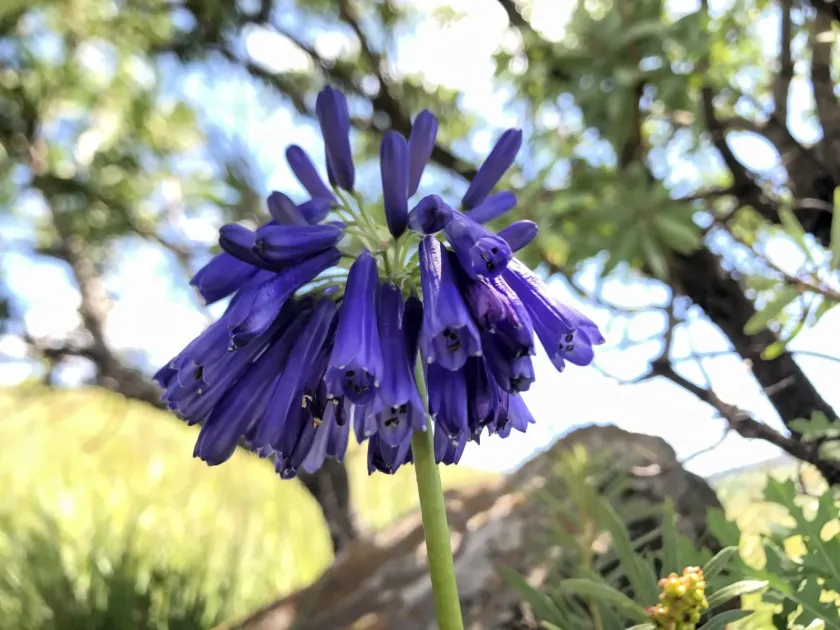
Agapanthus inapertus subsp. hollandii is a distinctive perennial plant belonging to the Amaryllidaceae family. It is widely recognized for its deep blue to purple, bell-shaped nodding flowers, which differ significantly from the upright habit of other agapanthus species.
Originating from the mountainous regions of South Africa, this plant has adapted to diverse climatic conditions. In an agricultural and horticultural context, it is treated as a decorative crop that thrives best when its native environmental conditions are replicated.
The crop demands a well-draining, nutrient-rich soil to ensure healthy growth. Because of its fleshy root system, heavy clay soils that retain moisture can lead to root rot, necessitating the inclusion of sand or gravel to improve permeability.
Sunlight exposure is crucial for the development of flower scapes. Ideally, this plant should be grown in full sun locations to ensure high-quality blooms. Insufficient light often leads to stunted growth and failure to produce the characteristic flower heads.
Regarding water management, the crop requires a distinct cycle. During the growing season, consistent moisture is necessary, but during the dormant phase in autumn and winter, the plant should be kept relatively dry to prevent winter damage and root issues.
Main diseases and pests
Root rot is the most significant disease threat to this cultivar. It is primarily caused by excessive moisture and poor soil drainage, which provide an ideal breeding ground for soil-borne pathogens that attack the rhizomatous roots.
Pests such as slugs and snails are frequent visitors, especially in damp conditions, causing aesthetic damage to the leaves. In indoor or greenhouse settings, the plant can be infested by spider mites and mealybugs, which thrive in protected environments.
Cultural control includes maintaining cleanliness in the cultivation area and ensuring proper airflow between plants. This prevents the buildup of humidity and reduces the incidence of fungal pathogens that favor stagnant air.
Chemical control should be used as a last resort. Systemic fungicides are effective against persistent rot issues, while insecticidal soaps or specific horticultural oils can manage soft-bodied pests without causing excessive damage to the plant tissue.
Monitoring the plant regularly is essential for early detection of issues. By implementing strict quarantine procedures for new plants and maintaining optimal soil moisture, growers can significantly increase the longevity and health of their agapanthus stock.