
St. John's wort
Hypericum perforatum L.
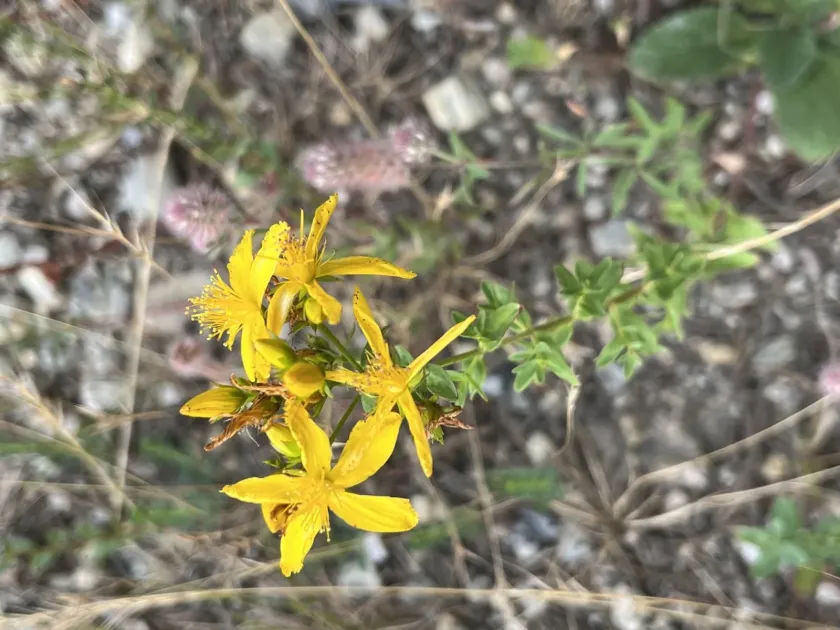
Description
Sowing dates
St. John's wort (Hypericum perforatum L.) is a perennial herbaceous plant belonging to the Hypericaceae family. It is a highly valued medicinal crop grown for its therapeutic properties and pharmacological applications.
The seeds of St. John's wort are extremely small, necessitating shallow planting at a depth of 0.5 to 1 cm. Sowing is typically performed in late autumn for natural stratification or in early spring using pre-stratified seeds.
Proper seedbed preparation is crucial; the soil should be fine-textured, firm, and moisture-retentive. Following sowing, the soil should be lightly rolled to ensure optimal contact between seeds and the soil surface.
Standard field planting involves row spacing of 45–60 cm to allow for efficient cultivation and mechanical weeding. Given the slow growth rate in the first year, establishing a weed-free environment is vital for plant survival.
Early plant development focuses on establishing a deep root system. Once established, the plants demonstrate high vigor and can persist in the field for several years.
Growing requirements
St. John's wort thrives in full sun, which is essential for maximizing the concentration of active compounds like hypericin. Shade negatively impacts the secondary metabolism of the plant, reducing its medicinal value.
The crop is adaptable to various soil types but prefers well-drained, fertile loams or sandy loams. It is intolerant of waterlogged soils, which promote root rot and significantly reduce yield potential.
The plant is highly hardy and exhibits excellent tolerance to drought once established. Its deep taproot allows it to survive in environments where moisture availability fluctuates throughout the season.
Soil pH should ideally be neutral or slightly acidic. On highly acidic soils, liming is recommended prior to site preparation to balance the nutrient profile and promote healthy growth.
Moderate phosphorus and potassium fertilization support flowering and increase overall plant resistance to environmental stress. Excessive nitrogen should be avoided as it promotes leaf growth at the expense of floral development.
Yield
The commercial harvest consists of the aerial parts of the plant, collected during the peak of the flowering phase. Yields typically range from 1 to 2 tonnes of dried herb per hectare under optimal conditions.
Plantations are usually kept for 5 to 7 years, with peak yields occurring between the second and fourth years of cultivation. Management involves regular monitoring to decide when to rotate the crop.
Harvesting is performed by cutting the top 20–30 cm of the stems. Selective harvesting ensures the product contains a high proportion of flowering heads and young leaves, meeting quality standards.
Post-harvest processing requires rapid transfer to a drying facility. Using convective or infrared dryers at controlled temperatures (max 45°C) ensures the preservation of essential oils and active ingredients.
The final product is graded based on purity and color. High-quality St. John's wort should retain a vibrant green foliage and bright yellow petals after the drying process is complete.
Main diseases and pests
Fusarium wilt is a primary threat in wet seasons or on poorly drained sites. Management focuses on cultural practices, such as ensuring adequate soil drainage and spacing for ventilation.
Rust diseases caused by fungal pathogens can appear on foliage under humid conditions. If detected, prompt removal of infected plant tissue helps contain the spread within the plantation.
Pests, particularly leaf-eating beetles, can cause significant damage to the leaf biomass. Integrated pest management, including biological controls, is preferred over chemical interventions due to the crop's medicinal nature.
Crop rotation is essential for long-term health; St. John's wort should not be replanted on the same site for at least three years to break the cycle of soil-borne pathogens and pests.
Maintaining proper plant spacing encourages airflow, which drastically reduces the incidence of powdery mildew and other foliar infections during the mid-summer peak.
Harvesting
Harvest timing is critical and must coincide with full flowering. During this stage, the chemical profile is at its highest, ensuring the medicinal efficacy of the extracted biomass.
Mechanical harvesting is conducted during dry, sunny weather to ensure the lowest possible moisture content in the fresh material. Harvesting wet plants significantly complicates drying and increases energy costs.
Once harvested, the material must be processed immediately to prevent heating due to enzymatic activity in the fresh plant tissue. Rapid air movement in drying sheds is essential for quality.
Quality control during harvesting involves removing weeds and debris from the crop. Sorting tables or advanced machinery help achieve the required standards for pharmacological use.
After reaching a stable moisture level of 12%, the herb is baled or packed in breathable containers. Storage must occur in cool, dark, and dry conditions to prevent the degradation of active chemical components.