
Kalm's St. John's wort
Hypericum kalmianum L.
Description
Growing requirements
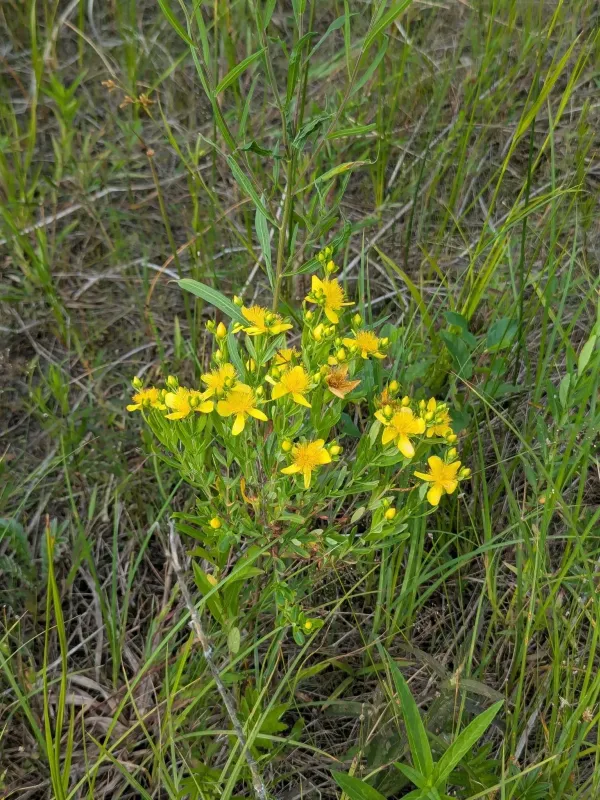
Kalm's St. John's wort (Hypericum kalmianum) is a semi-evergreen shrub belonging to the Hypericaceae family. Native to North America, it naturally thrives in rocky environments, limestone cliffs, and along the shores of the Great Lakes.
This shrub is characterized by its compact, rounded growth habit and narrow, bluish-green foliage. It produces clusters of vibrant, cup-shaped yellow flowers with prominent stamens that bloom throughout the mid-summer season.
The species is highly adaptable regarding soil conditions but performs best in well-drained, alkaline to neutral soil. It requires full sun exposure to maintain its form and to ensure a prolific display of flowers year after year.
In terms of climate requirements, the plant is quite hardy and can tolerate cold temperatures, making it a reliable choice for temperate landscape projects. It is frequently used in rock gardens, borders, and as an ornamental accent in shrub beds.
Maintenance is relatively low, focusing primarily on structural pruning to promote denser growth and to remove deadwood. Its resilience to urban environments further enhances its popularity in modern landscape architecture.
Main diseases and pests
Despite its robustness, the plant is susceptible to several fungal diseases, particularly when planted in areas with poor drainage or stagnant air. Powdery mildew and rust are common concerns that require prompt management.
Pests such as aphids and various types of leaf-eating beetles may occasionally target the foliage. These insects can reduce the aesthetic value of the shrub if their populations are not monitored during the active growing season.
Effective control strategies involve maintaining proper spacing between plants to encourage airflow. This cultural practice significantly reduces the microclimatic conditions favorable to fungal growth.
If chemical intervention becomes necessary, it is essential to select products specific to the identified problem. Always follow the application guidelines to avoid damaging the beneficial insects present in the garden.
Vigilance is key to maintaining a healthy shrub. Regular scouting and removing infected plant parts before the spread of spores helps keep the population of pathogens at manageable levels throughout the year.