
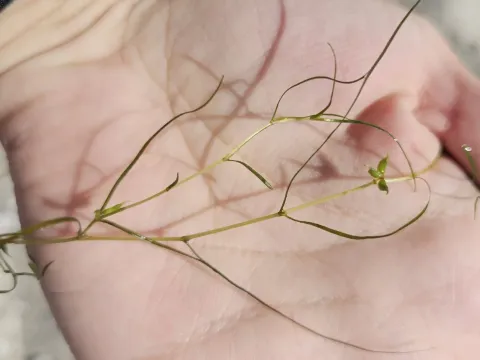
Zannichellia
Zannichellia
Zannichellia, commonly known as horned pondweed, is a genus of aquatic plants belonging to the Potamogetonaceae family. These plants are widely distributed across the globe, inhabiting freshwater, brackish, and sometimes even saline water bodies such as ponds, lakes, and rivers.
What the section contains


Zannichellia
The plant grows as a submerged hydrophyte, typically rooting into the muddy or sandy substrates of riverbeds and pond bottoms. It is highly adaptable and can survive in varying depths, although it most often thrives in shallow, relatively calm waters where sedimentation is high.
Botanically, Zannichellia is characterized by slender, filiform stems and opposite, linear leaves. The plant exhibits a unique reproductive strategy, producing small flowers directly under the water, which are later fertilized as the pollen floats through the aquatic medium.
It requires moderate light intensity for photosynthesis and performs best in water temperatures ranging between 15 and 25 degrees Celsius. Its ability to tolerate different levels of salinity allows it to occupy niches that are inaccessible to many other freshwater aquatic plants.
As a key component of aquatic flora, it contributes to oxygenating the water and provides crucial micro-habitats for aquatic invertebrates and young fish. Its ecological plasticity makes it a resilient species capable of rapid expansion in stable water environments.
Despite its adaptability, Zannichellia faces threats primarily from changes in water quality, such as heavy metal contamination or high levels of industrial runoff. These pollutants directly impact the plant's ability to absorb nutrients and perform photosynthesis.
Pathogenic fungi can cause rot in the stems, especially in stagnant waters with high organic loads. When the water becomes over-enriched with nutrients, algae blooms often compete with Zannichellia, shading it out and causing the colony to decline.
Various aquatic invertebrates, including specific snails and larvae, may graze on the soft tissues of the plant. While minor grazing is natural, large-scale outbreaks of these pests can significantly reduce the biomass of the submerged colonies.
Hydrological modifications, such as dredging or significant shifts in the water level, pose a major threat to the survival of the plant. These activities uproot the plants and destroy the physical structure of the bottom sediment needed for establishment.
Climate change, manifesting in prolonged droughts that dry out shallow water bodies, remains a critical threat to the long-term survival of local Zannichellia populations. Protecting the integrity of the water cycle is essential for its conservation.