
Sharp-leaf pondweed
Potamogeton oxyphyllus
Description
Growing requirements
Sharp-leaf pondweed (Potamogeton oxyphyllus) is a perennial aquatic herb belonging to the Potamogetonaceae family. In agronomy and aquaculture, it is recognized as a vital component for maintaining ecological balance within managed aquatic environments and fish farming ponds.
The plant prefers bodies of water with moderate flow and high light penetration. It typically thrives at depths ranging from 0.5 to 2 meters. Water clarity and dissolved oxygen levels are critical limiting factors for its successful development and biomass production in agricultural water systems.
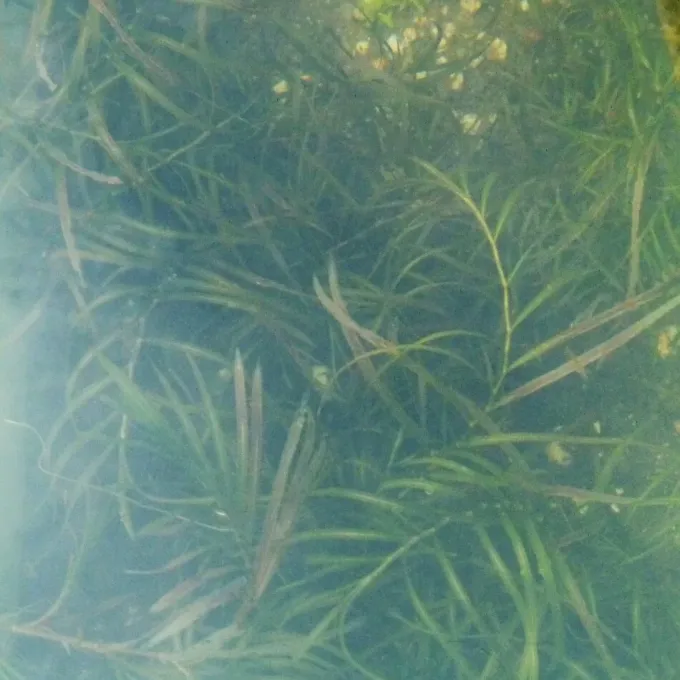
Botanically, this species is characterized by elongated, thin stems and linear, sharp-pointed leaves. The root system effectively extracts nutrients from benthic sediments, which makes the plant an efficient agent for nutrient cycling within the aquatic ecosystem of a managed pond.
In commercial fish farming, pondweed acts as a natural biofilter, reducing concentrations of excess organic matter and ammonia. This functional role improves water quality, creating a sustainable and healthy environment for the cultivation of various freshwater fish species.
The economic value of this plant lies in its ability to provide a natural food source for herbivorous fish, such as grass carp. Additionally, its dense submersed foliage offers essential shelter for juvenile fish and serves as a substrate for beneficial macroinvertebrates, boosting the overall productivity of the water body.
Main diseases and pests
The main threats include water pollution from agricultural runoff, which introduces excess nutrients leading to algal blooms that block sunlight. Furthermore, certain aquatic insects and snails can cause significant damage to the stems, potentially reducing the overall plant population in the pond.