
Potamogeton gayii
Potamogeton gayii
Description
Growing requirements
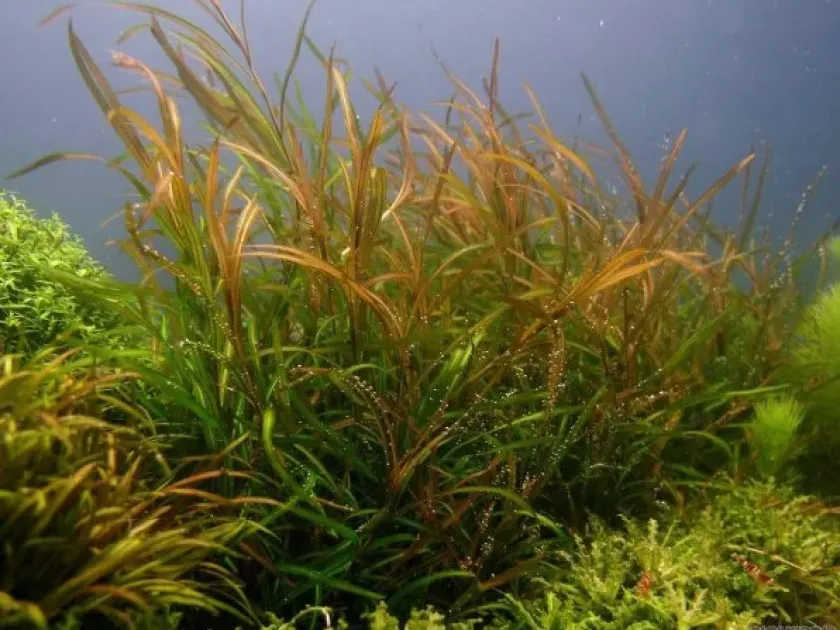
Potamogeton gayii, commonly known as a member of the Pondweed family (Potamogetonaceae), is a highly sought-after aquatic plant native to South America. It is widely recognized for its delicate, linear foliage and its ability to create a dense, grass-like appearance in submerged landscapes.
This species requires high light intensity to maintain its characteristic structure and vibrant green color. When light levels are insufficient, the plant tends to stretch excessively, resulting in a sparse and fragile appearance that is less desirable for aquascaping purposes.
For successful cultivation, a nutrient-rich substrate is essential. The plant utilizes its roots to absorb minerals from the sediment, and regular supplementation of CO2 and liquid fertilizers is recommended to encourage robust growth and lateral branching.
The ideal temperature range for Potamogeton gayii is between 20°C and 28°C. It thrives in soft to moderately hard water conditions with a neutral to slightly acidic pH, mirroring the natural chemistry of the slow-moving South American water bodies where it originates.
Propagation is primarily achieved through stem cuttings. Once planted in a fertile substrate, the cuttings quickly develop a strong root system, allowing the plant to spread effectively and form dense clusters that provide excellent shelter for small aquatic fauna.
Main diseases and pests
The primary threats to this culture include infestations by hair algae, which can outcompete the plant for light and nutrients. Furthermore, micronutrient deficiencies, particularly of iron, can lead to yellowing leaves and stunted growth, necessitating precise water chemistry management.