
Zannichellia contorta
Zannichellia contorta
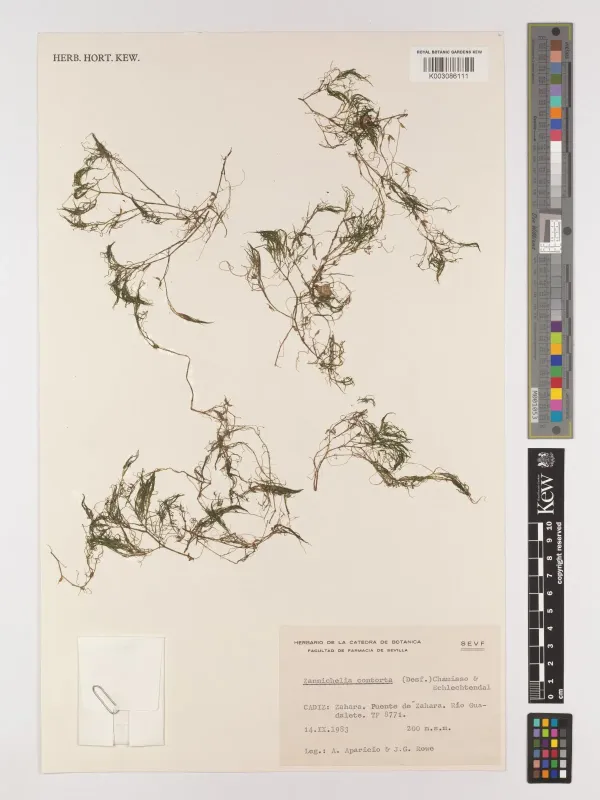
Description
Growing requirements
Zannichellia contorta is a submerged aquatic plant species belonging to the Potamogetonaceae family, commonly adapted to life in freshwater and brackish environments.
The plant features slender, thread-like stems and narrow leaves, which allow it to thrive underwater while maintaining structural integrity in moving or still water.
It typically roots in muddy or sandy substrates at the bottom of ponds, ditches, and lakes, drawing nutrients through its leaf surface and sparse root systems.
Optimal growth conditions include high water transparency, which allows sunlight to penetrate deep enough for efficient photosynthesis in the submerged canopy.
The plant demonstrates significant ecological resilience, surviving seasonal water level fluctuations and various mineral concentrations typical of temperate wetland zones.
Yield
While not a standard agricultural crop, Zannichellia contorta serves as a crucial component in aquatic ecosystem management and natural water purification.
It acts as a primary producer, supporting the aquatic food web by providing habitats for invertebrates and essential foraging grounds for various fish species.
The species is highly valued in environmental engineering for its ability to absorb excess nutrients from the water column, thus preventing problematic algal blooms.
In aquaculture, the presence of these plants helps to oxygenate the water and provides spawning sites, which significantly enhances the survival rates of young fish.
Scientific interest in this species focuses on its potential for phytoremediation, as it effectively assists in maintaining biological equilibrium in managed water bodies.