
Thin-leaved pondweed
Potamogeton tenuifolius
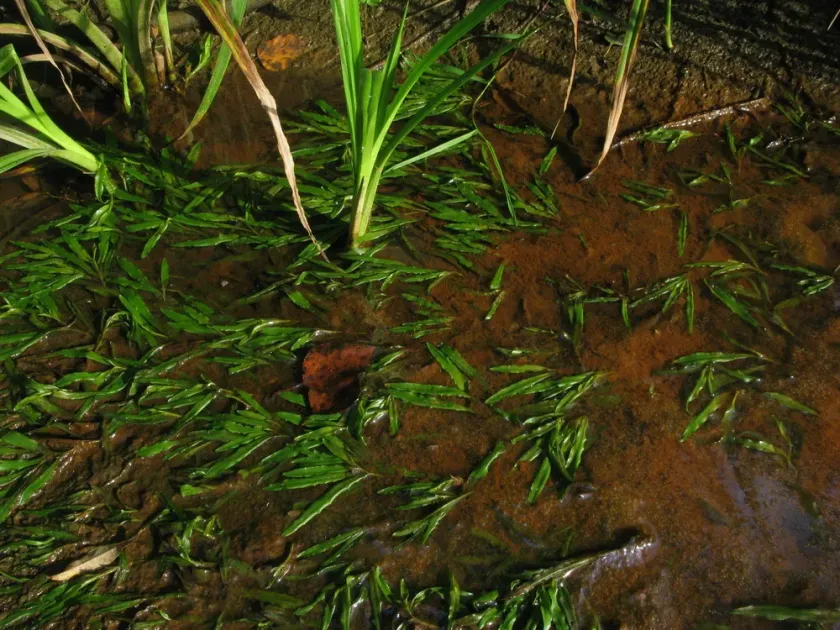
Description
Growing requirements
Thin-leaved pondweed (Potamogeton tenuifolius) is an aquatic perennial plant belonging to the Potamogetonaceae family. It is a submersed hydrophyte typically found in freshwater habitats, including lakes, ponds, and slow-moving river sections.
The plant is native to temperate regions and is adapted to varying aquatic conditions. It thrives in locations where the water column provides adequate transparency, ensuring that light penetration meets the requirements for photosynthesis in deeper layers.
Substrate composition is a critical factor for successful growth. Potamogeton tenuifolius prefers nutrient-rich muddy or silty bottoms that provide the necessary minerals for its root system, allowing it to anchor securely in the benthos.
Botanically, the species is distinguished by its slender, linear leaves and branched stems. This structural flexibility allows the plant to withstand water currents and maximizes surface area for nutrient absorption directly from the surrounding water.
In terms of ecological utility, this pondweed serves as an essential habitat for aquatic fauna. It provides shelter for fish fry and micro-crustaceans, while simultaneously acting as a biological filter that maintains water quality in natural and managed ponds.
Main diseases and pests
Environmental threats to this species include water eutrophication and severe chemical contamination. High nutrient levels often lead to algal blooms that shade out submersed vegetation, resulting in the decline of pondweed populations.
Pests and diseases are primarily represented by insect larvae that feed on foliage and various fungal pathogens. When environmental stress occurs, these organisms can cause significant damage to the plant tissue, reducing its capacity for regeneration.