
Smooth woodsia
Woodsia glabella
Description
Growing requirements
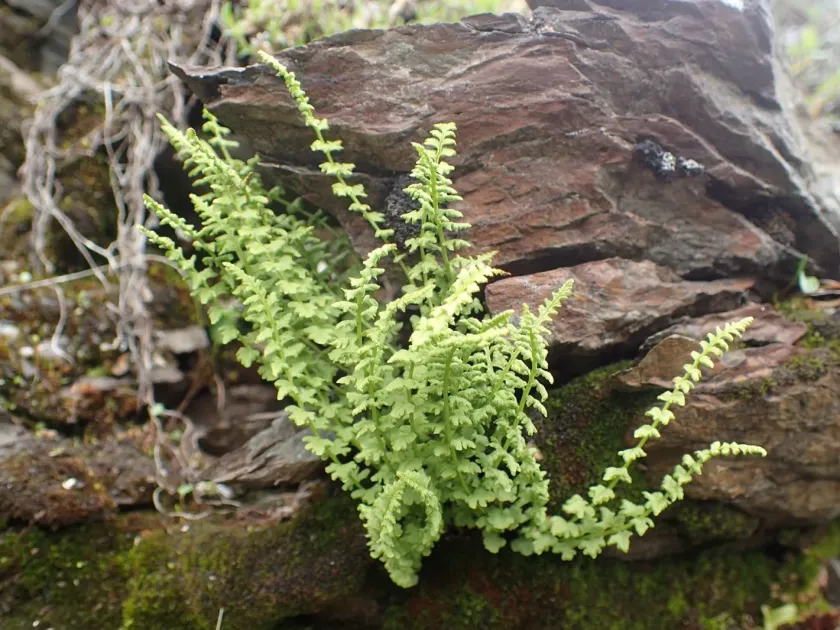
Smooth woodsia (Woodsia glabella) is a perennial fern belonging to the Woodsiaceae family. It is primarily found in circumpolar regions and mountainous areas of the Northern Hemisphere, where it occupies crevices in rocky cliffs. In cultivation, it is prized as a delicate, rock-loving specimen for specialized fern collections.
The plant thrives in cool, moist climatic conditions. It does not tolerate high heat or stagnant air, making it suitable for alpine gardens or specialized crevice plantings where temperatures remain moderated. It is essential to replicate the cool microclimate of its natural rocky habitat.
Soil requirements for Woodsia glabella involve a gritty, well-draining substrate. It prefers a slightly alkaline or neutral soil mixture containing crushed limestone and gravel. Good drainage is non-negotiable; any water stagnation will quickly lead to the death of the root system.
Light conditions should be partial shade to bright, filtered light. Protecting the fern from intense direct sunlight is vital, as the fronds are prone to dehydration and bleaching. Morning light is generally better tolerated than the harsh heat of late afternoon sun.
Management of this culture requires precise irrigation. Watering should be kept consistent but minimal, ensuring the soil remains moist without becoming waterlogged. During the winter, the plant goes dormant and requires protection from excess precipitation and frost-heaving of the soil.
Main diseases and pests
Root rot represents the most significant threat to Smooth woodsia, typically caused by improper drainage or excessive watering. Ensuring high soil aeration and avoiding overhead irrigation helps minimize the risk of pathogens settling in the rhizome area.
Slugs and snails are the most prominent pests, capable of consuming significant portions of the foliage. To mitigate this risk, gardeners often place coarse grit or sand around the base of the plant, which serves as a natural barrier against these mollusks.
Aphids may occasionally appear during prolonged dry spells, clustering under the fronds and draining the plant's vitality. Early detection and manual removal or using a gentle water spray can often keep populations under control without chemical intervention.
Foliar nematodes can pose a serious problem, manifesting as browning, necrotic patches on the leaves. Once an infection is detected, the affected parts or the entire plant should be isolated to prevent the spread to other susceptible fern species.
Nutrient deficiency or toxicity can occur if synthetic fertilizers are applied incorrectly. As a plant native to lean, rocky soils, it has low nutritional requirements; therefore, over-fertilization can burn the roots and cause stunted growth rather than development.