

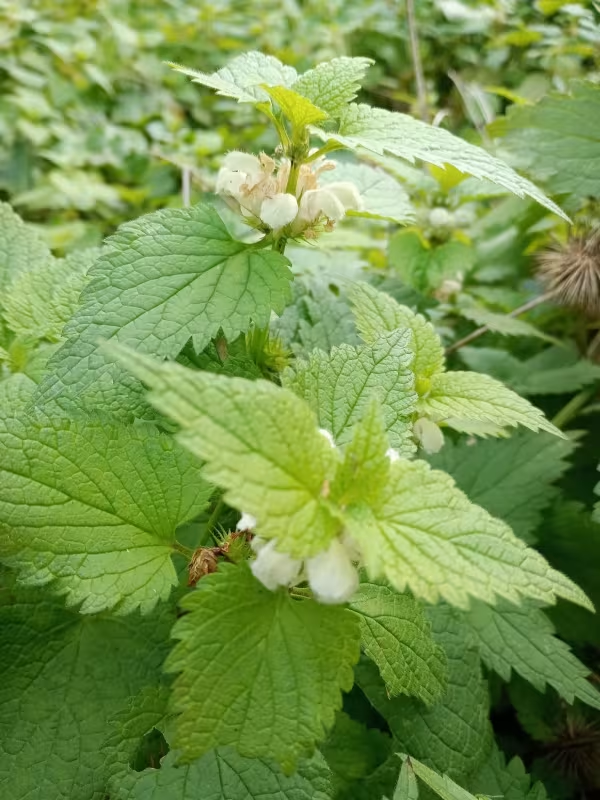
Description
Sowing dates
White dead-nettle (Lamium album), a member of the Lamiaceae family, is a vigorous perennial plant with a rhizomatous growth habit. In agricultural practice, it is propagated either by seeds or by rhizome division.
Seed sowing is recommended in autumn to take advantage of natural stratification, which is essential for uniform germination in the following spring. Seeds should be sown in prepared, fine-textured seedbeds.
For vegetative propagation, rhizome segments are planted at a depth of 5 to 10 centimeters, with spacing of 30–40 centimeters between plants to allow for sufficient root development and spread.
The planting site must be cleared of perennial weeds before establishment. As a competitive species, white dead-nettle establishes itself quickly once environmental conditions are met.
In large-scale operations, maintaining clean aisles between rows is critical during the first season to ensure the crop establishes without competition from spontaneous weeds.
Growing requirements
The plant thrives in fertile, well-drained loamy soils. It prefers moisture-retentive substrates but does not tolerate prolonged waterlogging, which can lead to root system decay.
White dead-nettle is highly adaptable to various climatic zones within the temperate range. It exhibits excellent winter hardiness and can resume growth shortly after the snow melts.
While the plant can grow in partial shade, optimal yields of bioactive compounds are achieved in full-sun locations. Light exposure is a major factor in the chemical profile of the aerial parts.
Soil pH should ideally be neutral or slightly acidic. If the soil is nutrient-poor, organic amendments such as well-rotted manure or compost are recommended to boost biomass production.
Regular maintenance involves checking moisture levels during dry spells, as drought conditions tend to induce early flowering and a reduction in vegetative biomass suitable for harvesting.
Main diseases and pests
Common agricultural pests affecting white dead-nettle include aphids and certain beetles that feed on young foliage. Early detection is key to preventing widespread damage during the growing season.
Fungal diseases, especially powdery mildew, represent the primary threat in environments with poor air circulation or high humidity. Proper plant spacing is the most effective preventative measure.
Integrated pest management (IPM) is highly encouraged to protect pollinators, as white dead-nettle is an early-season source of nectar for honeybees and other beneficial insects.
If chemical interventions are necessary, they must be strictly timed to avoid residues on the harvested herbal product and to ensure compatibility with organic production standards if applicable.
Sanitation practices, such as removing debris and preventing the accumulation of wet plant material at the base of the crop, are vital for maintaining the overall health of the plantation.
Harvesting
The harvest phase targets the aerial parts, specifically the tops of the stems with flowers and leaves. This is typically done during the peak flowering period between late spring and mid-summer.
Mechanical harvesting equipment can be employed for large areas, provided that the cutters are set to leave enough of the plant structure for potential regrowth or protection of the root system.
Immediate drying is essential to prevent fermentation and the loss of volatile compounds. Drying should occur in a dark, airy environment or in professional dryers at temperatures not exceeding 45°C.
Once dried to the desired moisture content (typically below 12%), the product must be cleaned and packaged in airtight, opaque containers to preserve its color and medicinal properties.
Effective management includes rotating the harvesting sections to ensure the longevity of the perennial stands, as excessive continuous cutting can weaken the plant over multiple years.
Reference
Connections · White dead-nettle
Most often together:
Marketplace