
Valerianella tuberculata
Valerianella tuberculata
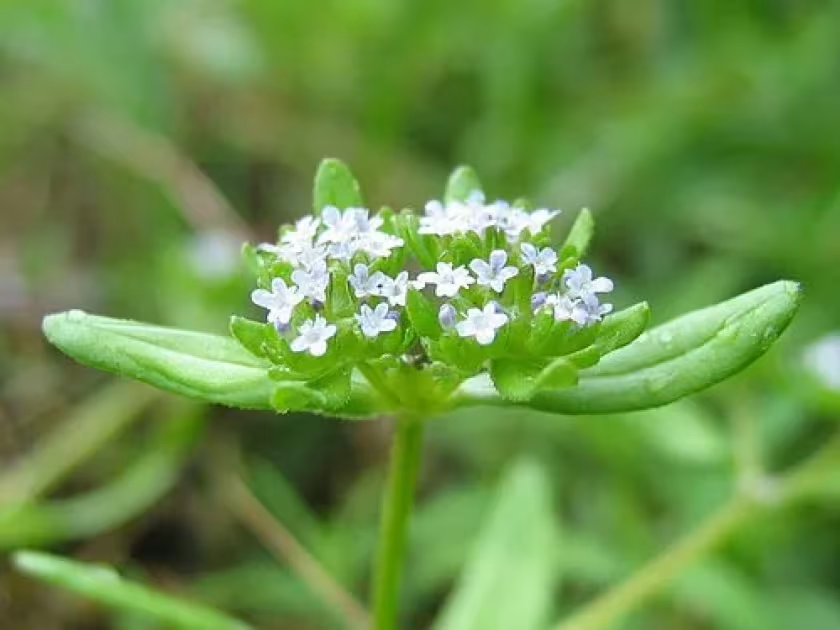
Description
Sowing dates
Valerianella tuberculata belongs to the Valerianaceae family. Sowing is best performed in late autumn or early spring, as the crop prefers cool temperatures to form dense leaf rosettes.
For an early harvest, winter sowing is often practiced, allowing the seeds to germinate immediately after the snow melts. Sowing depth should be maintained between 0.5 and 1 centimeter.
The optimal planting pattern involves row sowing with spacing of approximately 15–20 centimeters, which provides sufficient space for plant development and facilitates easier maintenance.
Adhering to correct seeding rates is crucial to avoid overcrowding. Excessive density often leads to poor air circulation, which increases the risk of fungal infections within the base of the plant.
The plant is known for its frost resistance, allowing it to be grown in open fields even in regions with moderate climates without requiring additional protection.
Growing requirements
Valerianella tuberculata thrives on light, well-drained loamy or sandy soils with a neutral pH. Waterlogging is the primary factor that can severely damage the root system of this crop.
The plant has specific light requirements. While it can tolerate partial shade, maximum yield and high-quality rosette formation are achieved in well-lit growing conditions.
The ideal temperature range for active growth is between 10 and 18 degrees Celsius. Exposure to temperatures above 25 degrees triggers early bolting and negatively impacts leaf quality.
Consistent soil moisture is essential throughout the growing period. Regular, light irrigation helps prevent the leaves from becoming coarse and keeps them from developing an unpleasant bitter taste.
Organic fertilization is best applied to the previous crop in the rotation. Nitrogen levels should be carefully monitored to avoid nitrate accumulation in the edible leafy biomass.
Yield
The yield of Valerianella tuberculata is directly proportional to the quality of agrotechnical management and irrigation efficiency. Under optimal conditions, a high volume of greens per unit area can be achieved.
The vegetative period from sowing to harvest typically ranges from 45 to 60 days. Successive planting allows for a continuous supply of fresh produce throughout the season.
The marketable produce consists of a compact basal rosette. Quality assessment relies on rosette density, vibrant leaf color, and the absence of signs indicating the onset of the reproductive phase.
As the plant does not exhibit significant regrowth potential after harvesting, a single-harvest approach is used, typically removing the entire plant along with its roots.
Maximum productivity is observed in greenhouse conditions during the autumn and winter months, where temperature and light can be strictly controlled to optimize growth.
Main diseases and pests
Powdery mildew is a primary threat to this crop, particularly when there are rapid fluctuations in air humidity and temperature during extended rainy periods.
Root rot often occurs in overwatered or compacted soils. Preventive measures focus on maintaining proper crop rotation and ensuring adequate soil aeration.
Pests like flea beetles and slugs can cause significant damage to young seedlings, potentially reducing stand density during the early development stages of the plant.
Aphid colonies may infest the leaves, leading to deformation and reduced market value. Biological control agents are recommended to manage these infestations effectively.
- Regular monitoring of plant health.
- Keeping the growing area free of weeds.
- Implementing efficient drainage systems.
- Prompt disposal of post-harvest crop residues.
Harvesting
Harvesting should be performed manually in the early morning hours to ensure the leaves remain turgid and contain the maximum level of moisture.
Plants are cut at the base of the root crown or pulled entirely from the ground, depending on market preferences and specific packaging requirements.
Immediately after harvest, the produce should be cooled, as tender leaves are highly susceptible to wilting and quality loss at temperatures above 5 degrees Celsius.
Storage is conducted in refrigerated chambers at approximately 0 to 2 degrees Celsius, with high relative humidity maintained to extend shelf life.
Care must be taken during harvesting and transportation to prevent mechanical damage, which serves as a pathway for bacterial infection during the storage process.