
Dactyl-leaved corn salad
Valerianella dactylophylla
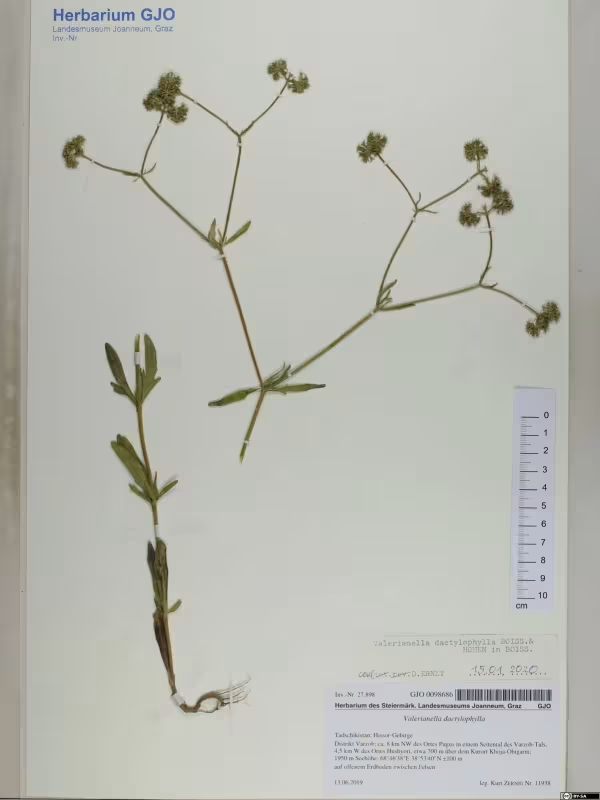
Description
Sowing dates
Dactyl-leaved corn salad (Valerianella dactylophylla) belongs to the Caprifoliaceae family. It is an annual herbaceous plant increasingly grown as a high-value salad green.
Sowing should take place in early spring as soon as the soil warms to 5-8 degrees Celsius. For a continuous supply, staggered sowing at two-week intervals is highly recommended.
Seeds are sown in rows at a depth of 1-1.5 cm. Maintaining 10-15 cm between rows provides sufficient space for the leaf rosettes to develop fully without overcrowding.
The plant is noted for its cold tolerance, allowing it to withstand light spring frosts, which makes it an ideal candidate for early-season production in many temperate climates.
After sowing, lightly firming the soil surface ensures good seed-to-soil contact, which is essential for uniform germination across the seedbed.
Growing requirements
This crop thrives in well-drained, fertile loamy or sandy soils with a neutral pH. Heavy, waterlogged soils should be avoided as they often lead to root rot issues.
Corn salad prefers sunny locations but is adaptable to various light conditions. Consistent moisture is the most critical requirement for achieving crisp and tender leaf growth.
Good soil drainage is paramount; the roots are sensitive to stagnation, so raised beds are often used in regions with high rainfall to prevent waterlogging.
The ideal growing temperature range is 12-18 degrees Celsius. High temperatures trigger premature bolting, so it is best to complete the growth cycle before the onset of summer heat.
Routine care involves light cultivation between rows to maintain aeration and weed control, which prevents competition for nutrients and ensures robust plant development.
Yield
Yield potential of Valerianella dactylophylla is largely determined by soil fertility and management practices. Under optimal conditions, yields range from 1.5 to 2.5 kg per square meter.
The harvestable portion is the tender rosette of leaves. Achieving a high-quality yield requires precise management of irrigation and spacing to avoid stunted or yellowed foliage.
High-intensity cultivation, supplemented with compost or well-rotted organic matter, significantly boosts the vegetative growth and overall quality of the leaves.
It is vital to harvest before the plant transitions into the reproductive stage, as the formation of flower stalks degrades both the texture and the flavor profile of the greens.
Consistent moisture management during the final phase of growth is essential to maximize leaf size and maintain the succulent quality valued in fresh market production.
Main diseases and pests
Root rots are the most common concern, usually occurring when soil drainage is poor or irrigation is excessive. Prevention starts with proper site preparation.
Pests such as flea beetles and slugs can cause significant damage to young leaves. Monitoring during the initial growth stages is necessary to mitigate these threats.
Powdery mildew may develop in conditions with poor airflow and high humidity. Ensuring adequate plant spacing and regular cleaning of the area are the best preventative measures.
Integrated pest management, including the use of physical barriers and biological controls, is preferred given the short maturation period of the crop.
Early identification of pest or disease outbreaks through regular field inspection allows for prompt action, protecting the crop from significant economic loss.
Harvesting
Harvesting typically occurs 40-60 days after emergence, depending on conditions. The plants are either harvested by cutting the entire rosette at the base or picking individual leaves.
Harvesting during the early morning hours ensures the leaves are at peak turgidity, providing the best possible quality and shelf life for the final product.
Immediate cooling of the harvested greens is crucial to remove field heat, which slows down transpiration and maintains the crisp texture of the foliage.
Transport should be performed in well-ventilated containers to prevent moisture buildup, which can promote decay during transit and storage.
Given its delicate nature, the product should reach the end consumer as quickly as possible to ensure the highest level of freshness and nutritional content.