
Valerianella echinata
Valerianella echinata
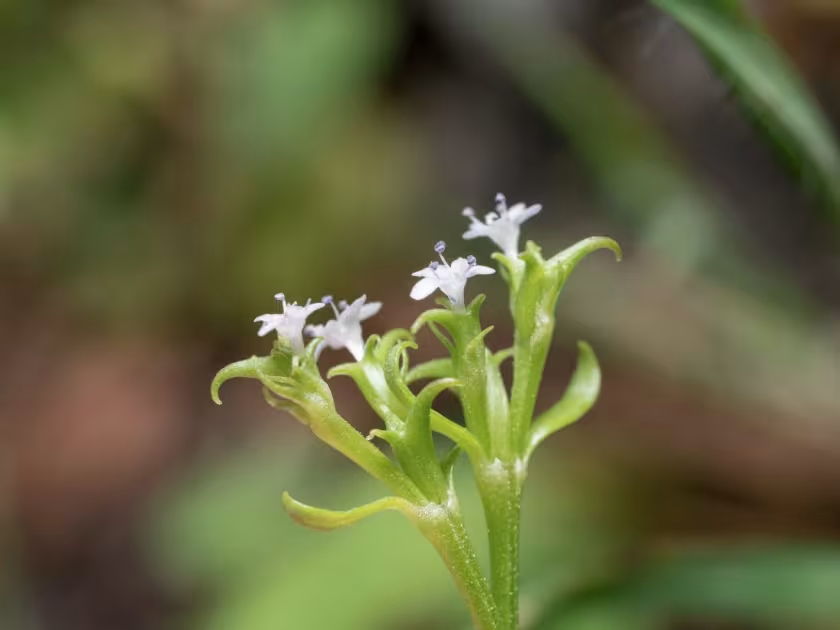
Description
Sowing dates
Valerianella echinata is an annual herbaceous plant belonging to the Caprifoliaceae family. Sowing in open ground should be performed in early spring when the soil temperature consistently reaches +5...+8°C.
The best time for sowing is March or April, as the crop prefers cooler weather for optimal germination. Late autumn sowing is also possible to ensure an early harvest in the following spring.
Seeds should be sown at a depth of 1–1.5 cm. Once seedlings appear, it is essential to thin them out, leaving a distance of 10–15 cm between individual rosettes for proper growth.
This crop grows rapidly, so for continuous production, seeds should be sown in batches every 2–3 weeks throughout the spring season.
It is important to note that the plant is sensitive to long day length, which triggers premature bolting, making cultivation less effective during the height of the summer.
Growing requirements
The plant thrives in fertile, loose, and well-drained soils. It prefers loamy or sandy-loam soils with a neutral or slightly acidic pH for optimal development.
Adequate soil moisture is a key requirement: during dry spells, regular irrigation is necessary, as drought causes leaves to toughen and significantly reduces marketable yields.
Light levels should be moderate; the crop tolerates partial shade well. Direct sunlight during hot weather can lead to leaf scorching and a decline in flavor quality.
Valerianella echinata is a cold-hardy plant that develops best in temperatures ranging from +12°C to +18°C. Extreme heat has a negative impact on its vegetative stage.
Fertilizers are applied during soil preparation using organic matter. Mineral supplements should be used cautiously to avoid excessive nitrate accumulation in the leaves.
Yield
The yield potential depends on adherence to agricultural standards and irrigation management. On average, one square meter can produce between 1 and 2 kilograms of high-quality fresh greens.
The economic value of this crop lies in its early harvest potential, providing essential vitamins and minerals during the early spring season when other greens are scarce.
The leaves have a delicate flavor with a mild nutty undertone, making them a highly valued ingredient in culinary applications and professional food service.
Productivity decreases once the plant enters the flowering phase. Removing flower stalks can prolong the harvest period, though this practice requires significant manual labor.
Using high-quality seed and practicing proper crop rotation ensures consistent returns for farms specializing in niche salad greens.
Main diseases and pests
The greatest threat is powdery mildew, which develops in conditions of high air humidity and dense planting without proper ventilation.
Root rot often affects crops in areas with water stagnation or in heavy, compacted soils that lack adequate drainage systems.
Among pests, slugs and snails are the most problematic, as they are particularly active during rainy weather and can destroy young seedlings in a very short time.
Aphids can also cause damage by feeding on the sap of young leaves, leading to deformation and a loss of marketability for the produce.
Disease prevention relies on rational watering, regular weeding, and ensuring good air circulation by thinning the plant population.
Harvesting
Harvesting is performed by cutting the entire leaf rosette before the appearance of flowering stalks, as the leaves have the best taste and texture at this stage.
The optimal time for collection is in the early morning. Greens harvested at this time retain turgidity and freshness longer, which is crucial for consumer satisfaction.
After cutting, the produce should be cleaned of soil residues and stored in a cool place, as the leaves lose moisture quickly if exposed to ambient heat.
During transport, it is necessary to prevent mechanical damage and overheating, preferably using ventilated packaging to maintain the quality of the greens.
Sorting during harvest is mandatory: yellow, damaged, or deformed leaves must be removed to improve the overall quality and competitiveness of the harvest batch.