
Urera repens
Urera repens
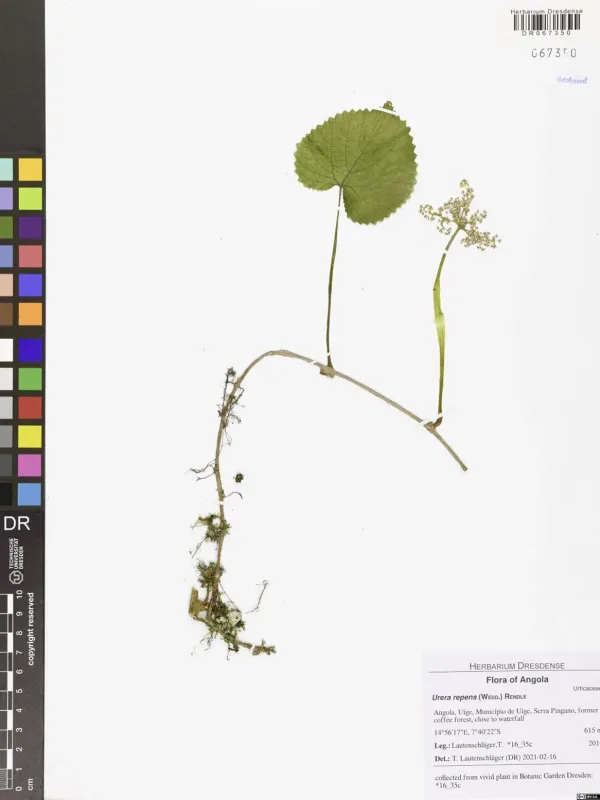
Description
Growing requirements
Urera repens is a distinct species within the Urticaceae family, recognized for its trailing growth habit and biological adaptation to moist, shaded environments. The plant naturally thrives in the understory of tropical forests, where soil organic matter is abundant.
Botanically, it is classified as a herbaceous perennial that spreads through creeping stems. These stems frequently develop roots at the nodes, allowing the plant to form dense mats across the forest floor, which is a key trait for its survival in competitive habitats.
Regarding climatic needs, Urera repens requires high ambient humidity and steady, moderate temperatures. It is highly sensitive to extreme heat and prolonged direct sunlight, which can quickly dehydrate its foliage and diminish the quality of its biomass.
Soil composition must be rich in leaf mold and compost to provide sufficient nutrients. A loose, well-draining structure is essential, as the plant's roots are highly susceptible to anaerobic conditions if the substrate becomes waterlogged.
In terms of agricultural utility, Urera repens is primarily researched for its potential secondary metabolites. Cultivation efforts are often focused on controlled greenhouse environments where microclimatic conditions can be strictly regulated for consistent output.
Main diseases and pests
The primary pathological threats to Urera repens include various soil-borne fungi, such as Pythium and Phytophthora. These pathogens thrive in poorly ventilated, overly wet soil, leading to rapid decay of the root collar and lower stems.
Spider mites represent the most significant pest challenge, especially in indoor or greenhouse settings. They feed on plant juices, causing stippling and eventual yellowing of the leaves, which significantly reduces the photosynthetic efficiency of the crop.
Aphids are another common pest that targets the tender, emerging growth of the plant. Their feeding can transmit viral pathogens and cause stunted or distorted development, necessitating prompt intervention with organic insecticidal soaps.
Mechanical damage to the foliage often facilitates the entry of bacterial infections. Proper handling during maintenance tasks is vital, as the plant's specialized hairs can be fragile and their rupture can create sites for secondary fungal infections.
To ensure healthy crop development, growers must maintain a rigorous hygiene protocol, including the sterilization of tools and regular inspection of the crop for early signs of infestations or disease symptoms.