
Urera baccifera
Urera baccifera
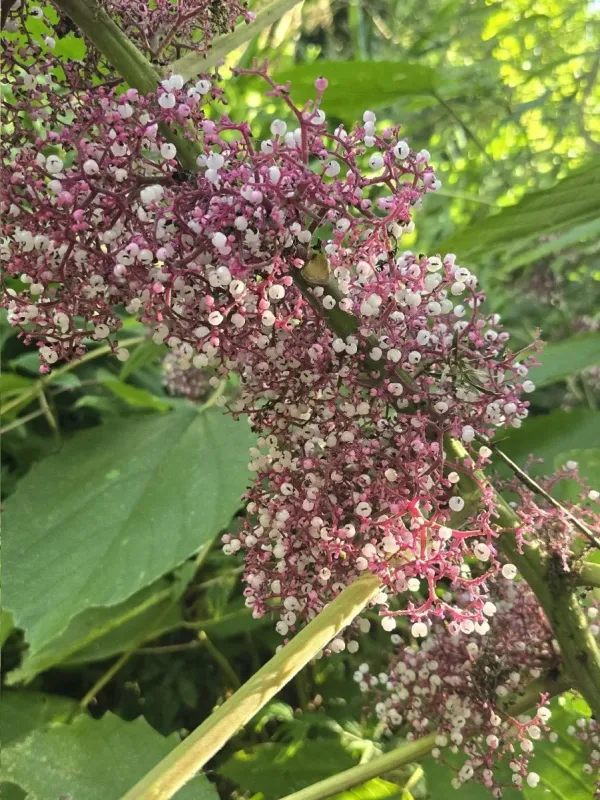
Description
Sowing dates
Propagation of Urera baccifera is typically achieved through seeds or stem cuttings, which are efficient methods for establishing new plantations or hedges.
Fresh seeds should be sown in nutrient-rich media immediately after harvest, as they tend to lose viability quickly if stored in dry or unsuitable conditions.
Cuttings are often preferred for agricultural settings because they allow for the rapid establishment of clones that maintain the desired hedge density.
Planting in the field is best performed at the onset of the rainy season to ensure that young plants have sufficient moisture to establish a root system.
Spacing requirements vary depending on the end goal, but typically, a distance of 60 to 100 centimeters is recommended for creating effective barriers.
Growing requirements
Urera baccifera, belonging to the Urticaceae family, is a fast-growing, evergreen shrub or small tree that thrives in humid tropical and subtropical environments.
The plant requires deep, well-draining soil rich in organic matter to support its rapid growth rate and continuous production of foliage.
While the species can tolerate light shade, it exhibits the most vigorous growth in locations that provide plenty of dappled sunlight throughout the day.
Stable climate conditions with minimal seasonal variation are preferred, as extreme temperature drops can cause significant stress to the plant structure.
Adequate water supply is essential during the dry season to prevent leaf drop and to maintain the defensive stinging hairs that characterize this species.
Yield
The primary agricultural application for Urera baccifera is the construction of living fences, which serve as highly effective livestock deterrents in tropical regions.
The fibrous bark of the plant is valued for its high tensile strength, providing a natural source of cordage for local farming communities and artisan use.
While the berries are edible, they are mostly consumed by local fauna, playing an important role in the biodiversity of the agroforestry system.
Limited use of the foliage for fodder is possible, provided the plant material is carefully processed to eliminate the stinging, irritating properties of the trichomes.
The plant is also utilized in traditional medicine, where various extracts are prepared to address inflammation and general wellness concerns.
Main diseases and pests
The most notable characteristic of the plant is the presence of potent stinging hairs, which pose a significant risk of contact dermatitis to farmers and livestock.
Pest management is focused on controlling leaf-eating insects, such as larvae of various moths, which can cause significant damage to young vegetative growth.
Fungal diseases, including root rot, can occur if the soil remains waterlogged or if the plant density prevents adequate air circulation around the stems.
Regular pruning is a recommended cultural practice to remove old or diseased wood and to maintain the vigor and health of the hedge structure.
Chemical control measures are generally avoided in favor of integrated pest management practices that preserve the local ecosystem and beneficial insect populations.