
Urera aurantiaca
Urera aurantiaca
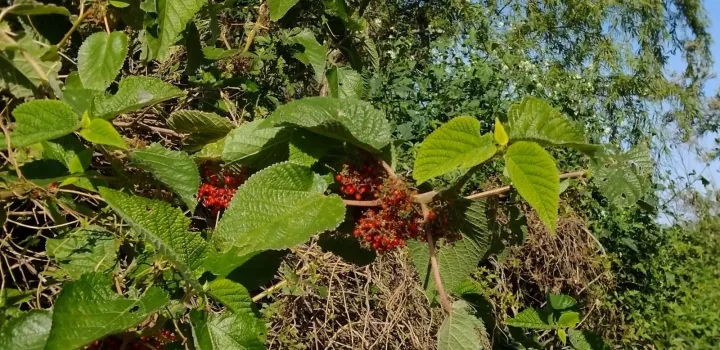
Description
Sowing dates
Planting Urera aurantiaca in its native tropical habitat typically coincides with the start of the rainy season, which provides the necessary soil moisture for seed germination. Under cultivated conditions, seeds are sown in a prepared, loose substrate rich in organic matter at a depth of no more than 1–2 centimeters.
For successful germination, it is critical to maintain soil temperatures between +22 and +28 degrees Celsius, as the plant is highly sensitive to cold. Seeds germinate quite slowly, so pre-sowing stratification or soaking in growth stimulants is highly recommended for higher success rates.
When using nursery propagation, seedlings are pricked out after the appearance of the first pair of true leaves, taking care not to damage the delicate root system. Transplanting to the permanent location occurs once the seedlings reach a height of 15–20 centimeters in a protected or semi-shaded environment.
Planting density depends on the specific production goal: for high-quality fiber, plants are placed more closely, which stimulates the growth of straight, unbranched stems. If the purpose is seed production, the distance between individuals is increased to ensure adequate air circulation and light penetration.
An important step is mulching the soil immediately after transplanting, which helps retain moisture and prevents overheating of the topsoil layer under the influence of direct sunlight.
Growing requirements
Urera aurantiaca belongs to the Urticaceae family and is a perennial woody or shrubby plant native to the tropical forests of South America. It prefers well-drained, fertile soils with a neutral or slightly acidic pH balance.
The plant is moisture-loving, making it critical to maintain stable substrate humidity without waterlogging, which can provoke root rot. In regions with dry seasons, organizing regular irrigation is a mandatory requirement for the survival of the culture.
Regarding light exposure, the species prefers filtered light or semi-shade conditions characteristic of the lower layers of the tropical forest. Direct sunlight can cause leaf burns, especially in young specimens, so commercial cultivation often involves the use of shading nets.
For active vegetative growth, stable temperatures between +20 and +30 degrees Celsius are required. Any temperature drop below +10 degrees has a detrimental effect on the plant's metabolism, often leading to growth stagnation or even death of the aerial parts.
The crop responds well to the application of complex organic fertilizers during the active growth season. Nitrogen fertilizers promote the development of green mass, which is essential for fiber production, while potassium fertilizers strengthen the stems and improve overall disease resistance.
Yield
The main economic resource of Urera aurantiaca is its high-quality bast fiber, known for its significant strength and elasticity. Traditionally, it is used by local communities to manufacture fishing nets, ropes, and durable sewing threads.
Fiber yield is directly dependent on the age of the plant and its growing conditions, with superior quality observed in stems harvested at the stage of technical maturity, prior to mass lignification. Maximum fiber output is achieved through intensive care and regular fertilization.
Secondary products include seeds and leaves, which are used in ethnobotany. Several indigenous groups use parts of the plant for medicinal purposes to alleviate inflammatory processes, although widespread industrial application of these properties remains limited by scientific data.
Biomass harvesting is conducted manually due to the plant's structural characteristics and the need to maintain fiber integrity. Mechanization of the harvesting process is currently difficult due to the specific conditions of growing the crop within tropical forest ecosystems.
With proper agronomy, a plantation can be exploited for several years, providing stable annual stem harvests as long as the rhizome remains undamaged during the cutting of the shoots.
Main diseases and pests
The most common diseases of Urera aurantiaca are fungal infections, such as anthracnose and powdery mildew, which thrive in conditions of high humidity and poor air circulation. Leaf infection significantly reduces the plant's photosynthetic activity.
Pests, including lepidopteran larvae and various aphid species, frequently damage young foliage and apical buds, slowing down the plant's growth. Biological control methods are preferred, as chemical pesticides are undesirable for plants intended for traditional medicinal use.
Root rot poses a serious threat if irrigation schedules are not followed strictly. In waterlogged soil, pathogenic microorganisms quickly infect the root system, leading to wilting and the eventual death of the plant's aerial portions.
Urera is also susceptible to soil-borne nematodes. Control measures include crop rotation, substrate sterilization before planting, and the use of phytosanitary barriers to prevent the spread of pests to healthy plant patches.
- Regular weeding to reduce competition for nutrients.
- Sanitary pruning of damaged or infected shoots.
- Ongoing monitoring of foliage for signs of infection.
Harvesting
The harvesting of stems is conducted by cutting with a sharp tool at a level of 10–15 centimeters above the soil surface. It is essential to use clean, disinfected equipment to eliminate the risk of introducing infections into the exposed stem tissues.
The optimal harvest time is determined visually by stem coloration and the degree of lignification; typically, this occurs 6–8 months after the start of active growth. Collected stems require immediate primary processing to extract the fiber.
Primary processing involves retting the stems in running or stagnant water to break down pectin bonds. This process lasts from a few days to several weeks, depending on water temperature and raw material maturity.
After retting, the fiber is separated from the woody core, thoroughly washed in clean water, and dried in the shade. Avoiding direct sun during the drying phase helps maintain the natural strength and elasticity of the fibers.
Once dried, the fibers are graded by length and quality, making them ready for further processing into textile products or other household applications.