
Urceolina ulei
Urceolina ulei
Description
Growing requirements
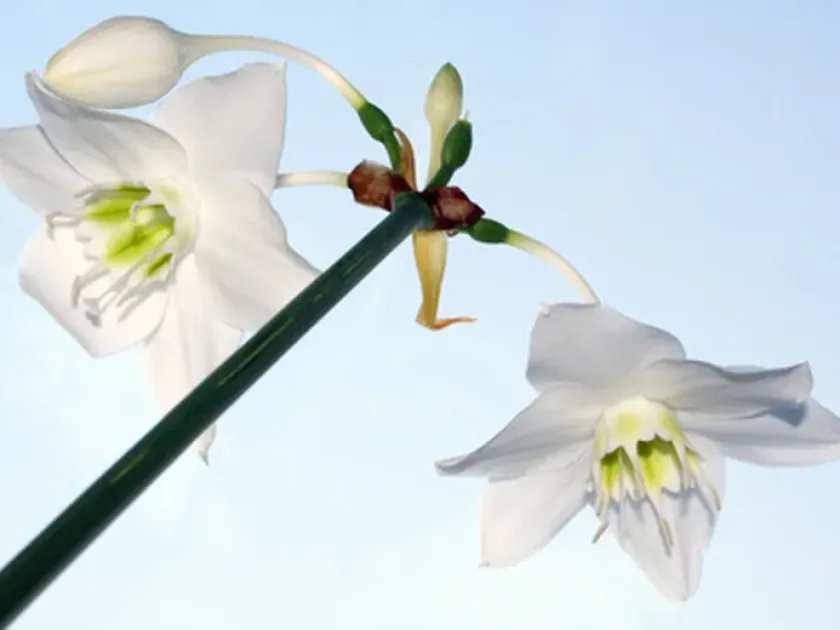
Urceolina ulei is a botanical species belonging to the Amaryllidaceae family. Native to the tropical regions of South America, specifically Peru and Brazil, it is a bulbous plant prized for its unique aesthetic and biological characteristics.
This crop thrives in conditions that mimic the tropical understory, requiring bright, indirect light to maintain healthy foliage and stimulate the development of its distinctive flowering stalks.
The ideal soil medium should be loose, well-draining, and rich in organic matter. A mixture of peat, perlite, and leaf compost provides the aeration needed to keep the bulbs healthy and prevent anaerobic conditions.
Climate management is critical: the plant requires a stable, warm environment with high humidity levels. During the active growing season, consistent moisture is necessary, followed by a dry rest period.
Temperature control is essential for the plant's health, with an optimal range between 20°C and 25°C. Avoid exposing the plant to temperatures below 12°C to prevent cold shock to the sensitive bulb system.
Main diseases and pests
The primary threats to Urceolina ulei include various forms of bulb rot caused by fungal pathogens such as Pythium and Phytophthora, usually triggered by waterlogged conditions.
Insect pests including spider mites and thrips pose significant risks, especially in indoor environments where air circulation is restricted and humidity is not properly maintained.
Management strategies involve practicing rigorous sanitation, using sterile potting media, and applying appropriate fungicidal drenches if early symptoms of root or bulb rot appear.
To control insect infestations, integrated pest management practices should be employed, using organic soaps or selective systemic insecticides when pest population thresholds are exceeded.
Monitoring the plant during the dormancy phase is crucial, as the bulbs remain vulnerable to rot even when the above-ground parts are absent; therefore, keeping the substrate slightly moist but not wet is vital.