
Urceolina hartwegiana
Urceolina hartwegiana
Description
Growing requirements
Urceolina hartwegiana is a striking bulbous perennial belonging to the Amaryllidaceae family. Native to the high-altitude cloud forests of Ecuador and Colombia, this species has adapted to cool, humid, and misty environmental conditions that must be mimicked in cultivation.
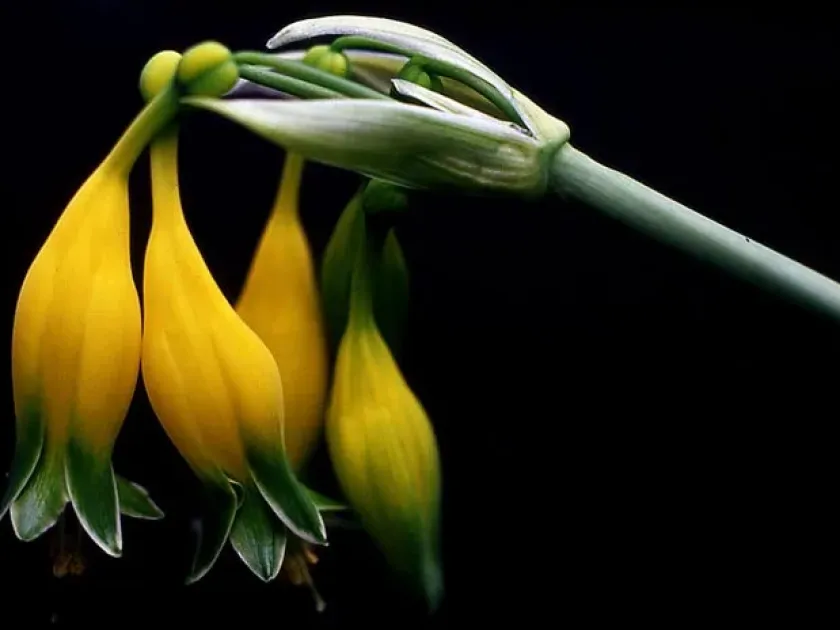
Botanically, the plant is distinguished by its small, bulbous root system and broad, deep green basal leaves. The most notable feature is its inflorescence, which consists of graceful, pendulous flowers shaped like small urns or bells, typically colored in shades of yellow and green.
Successful cultivation requires bright, filtered light. Direct sunlight is generally harmful to the foliage and can lead to rapid desiccation of the plant. A position near an east-facing window or under light canopy shade in a greenhouse is usually preferred for optimal growth.
The substrate must be highly porous and moisture-retentive but never soggy. A mix comprising peat, perlite, and decomposed leaf mold is ideal for Urceolina. Proper aeration of the root zone is crucial to prevent the bulb from rotting during dormant cycles.
Temperature management is key for this mountain plant. It prefers moderate conditions and dislikes extreme heat or prolonged freezing temperatures. Ensuring a period of reduced watering during the winter dormancy allows the plant to cycle effectively and bloom successfully in the following season.
Main diseases and pests
The primary threat to Urceolina hartwegiana is fungal pathogens, specifically bulb rot caused by waterlogged soil and poor ventilation. Keeping the growing medium slightly drier during the resting phase is essential to mitigate these biological risks.
Insects like spider mites and scale insects represent the most common pests for this plant. Regular leaf cleaning and the maintenance of adequate humidity levels act as natural deterrents against these invaders in indoor or greenhouse settings.