
Kaufmann tulip
Tulipa kaufmanniana Regel
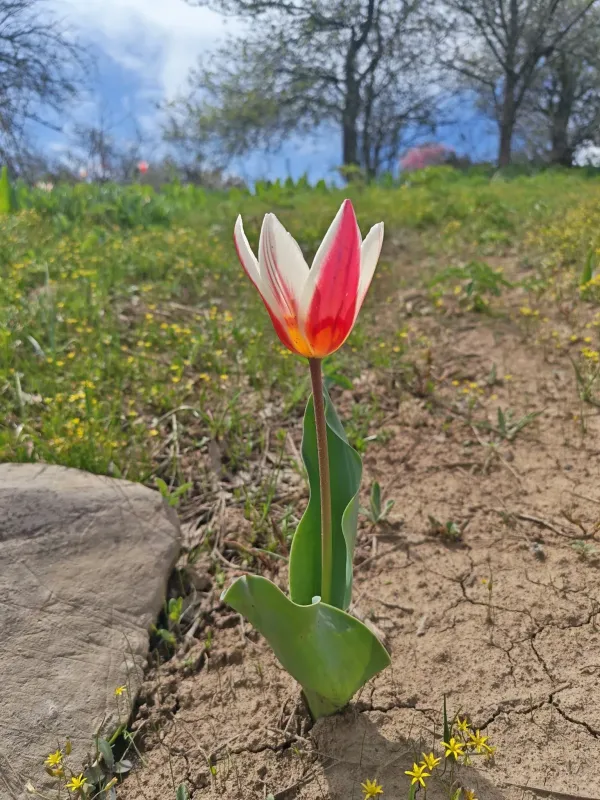
Description
Sowing dates
Planting of Kaufmann tulip bulbs is carried out in autumn, specifically from mid-September to late October. It is crucial to finish planting before the ground freezes to allow the bulbs to develop a healthy root system before winter dormancy.
The ideal soil temperature for root establishment is between 8 and 10 degrees Celsius at a depth of 10–12 cm. Planting too early can encourage premature sprouting, which risks damage from early winter frosts.
The planting depth should generally be three times the height of the bulb. On heavier clay soils, planting slightly shallower is recommended, while in sandy soils, deeper planting provides better stability and temperature regulation.
Adding a small layer of coarse river sand at the bottom of the planting hole is an excellent agronomic practice to improve drainage and prevent the base of the bulb from rotting.
After planting, apply a 3–5 cm layer of mulch, such as peat or well-rotted manure, to protect the bulbs from freezing temperatures and to help maintain consistent soil moisture levels during spring.
Growing requirements
The Kaufmann tulip, belonging to the Liliaceae family, is a prestigious bulbous plant native to the mountainous regions of Central Asia. It is highly valued for its early flowering and robust growth habit.
This species requires a location with full sun exposure to thrive and display its characteristic open, star-shaped flowers. In shaded conditions, the stems tend to become leggy, and flowering performance significantly declines.
Well-drained, fertile soil with a neutral to slightly alkaline pH is essential for successful cultivation. Excessive moisture or waterlogged soil is the primary cause of bulb failure in this species.
A balanced fertilizer program should be followed, consisting of three applications per season: at sprout emergence, at the budding stage, and immediately after flowering to replenish the bulb's energy reserves.
Regular but controlled watering is necessary during the spring growth phase. Always apply water at the base of the plant to keep the foliage dry, which effectively reduces the risk of fungal leaf infections.
Main diseases and pests
Botrytis, commonly known as gray mold, is the most prevalent fungal threat to the Kaufmann tulip, especially during cold, damp spring weather. It causes brown spotting and can rapidly decay plant tissue.
Tulip breaking virus, which causes irregular streaks on the petals, is a severe threat that reduces the decorative value of the flowers. There is no cure for this virus, so infected plants must be rogueed immediately.
Root mites and nematodes are significant soil-borne pests that damage the bulb base, hindering nutrient absorption and eventually weakening or killing the plant.
Rodents such as voles and mice often find tulip bulbs an attractive food source during the dormant winter months. Protecting the bulbs with hardware cloth or mesh baskets is a recommended preventative measure.
Effective management of diseases requires strict adherence to crop rotation, the use of disease-free bulbs, and systemic fungicide treatments applied during the pre-planting phase.