
Foster's Tulip
Tulipa fosteriana W. Irving
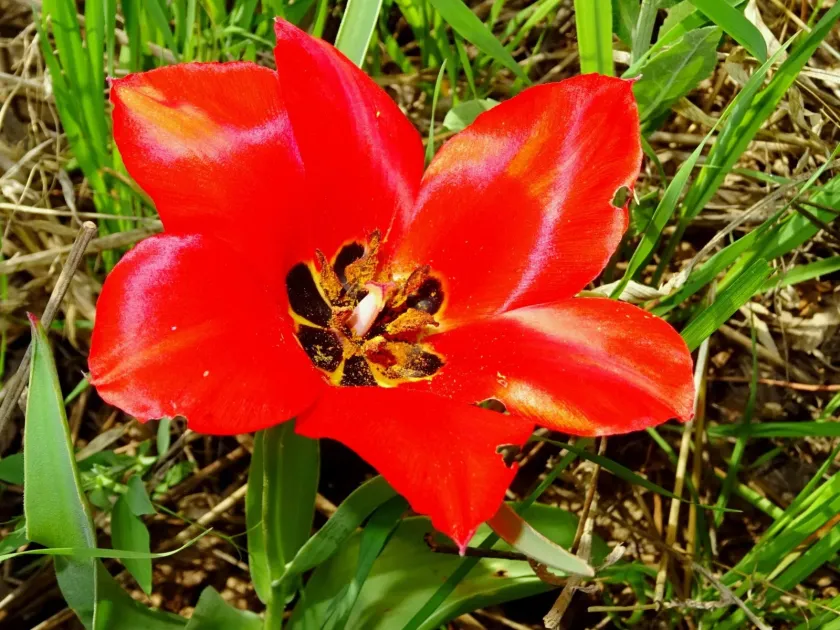
Description
Sowing dates
Foster's Tulip is a bulbous perennial belonging to the Liliaceae family. Planting in the field is traditionally done in the autumn, usually between September and October, when soil temperatures at a depth of 10-12 cm drop to 9-10 degrees Celsius.
The timing is crucial to ensure the bulbs establish a robust root system before the onset of hard frost, without allowing the foliage to emerge above the ground. Late planting may result in poor winter survival and reduced blooming potential in the following spring.
Planting depth should be approximately three times the height of the bulb. This ensures the bulb is well-anchored and protected from sudden temperature fluctuations while allowing for proper sprout emergence in early spring.
The soil should be well-drained and friable, preferably amended with organic matter such as well-rotted compost. Placing a layer of coarse sand at the bottom of the planting hole is a standard practice to prevent water stagnation around the bulb's basal plate.
Propagation is primarily vegetative, using offsets that develop around the parent bulb. Commercial growers carefully separate these small bulbs during the summer dormancy period to categorize them for future replanting based on their size and maturity.
Growing requirements
This species thrives in sunny locations with well-drained, fertile soil. Exposure to full sunlight is essential for the intensity of the petal color and for the bulb to accumulate enough energy for the next season's growth cycle.
The soil should have a neutral to slightly alkaline pH. Heavy, clay-based soils are generally unsuitable as they retain too much moisture, significantly increasing the risk of fungal infections and rot in the subterranean bulbs.
Water management is vital; while the plants require consistent moisture during the spring growth phase, they must remain relatively dry during their summer dormancy. Over-watering after flowering can easily destroy the bulbs.
Regular maintenance involves light hoeing between rows to improve soil aeration and weed control. Weeds not only compete for vital nutrients but can also facilitate the spread of pests and diseases throughout the bulb population.
In regions with harsh winters, covering the planting area with mulch can provide necessary protection against deep ground freezing. This is particularly important for newer plantings that haven't yet reached deep dormancy or in areas with fluctuating winter temperatures.
Yield
Foster's Tulip is highly valued in the nursery industry for its large, vibrant flowers and early blooming period. It is a fundamental species in creating massive floral displays and high-quality cut flower production across various climates.
Productivity is measured by the bulb's ability to produce high-quality blooms annually and its multiplication rate. Growers aim to maximize the size of the bulbs by providing optimal nutrition during the post-flowering period while the leaves are still green.
For cut flower production, harvesting is timed when the buds are showing their mature color but remain closed. This stage of maturity ensures maximum vase life and reduces potential physical damage during transport to retail markets.
Success in commercial cultivation relies heavily on selecting healthy, disease-free parent stock. Modern agrotechnical practices often include specialized fertilization programs to boost bulb development and vigor for consecutive growing seasons.
The overall yield is intrinsically linked to the environment provided during the storage period. Proper management of the curing phase ensures that the apical meristem is primed for rapid development upon planting in the autumn.
Main diseases and pests
The most devastating threat to tulip crops is the breaking virus, which causes irregular streaks on the petals. Because this virus is transmitted by aphids and has no chemical cure, affected plants must be culled and disposed of immediately.
Fungal diseases like Fusarium and Botrytis frequently attack bulbs stored in high humidity or planted in poorly drained sites. Using certified fungicides as a pre-planting dip is a standard and effective preventive measure in modern horticulture.
Root-infesting pests, such as bulb mites and bulb flies, cause structural damage that serves as entry points for rot. Consistent monitoring and the use of integrated pest management strategies are essential to keep these populations under control.
Rodents, particularly voles and mice, can cause severe damage by consuming bulbs during the winter months. Protecting planting beds with wire mesh or using specific deterrents are common methods to mitigate significant losses in large fields.
Crop rotation is a fundamental agrotechnical principle for this species. By moving the planting area every 3-4 years, growers drastically reduce the buildup of soil-borne pathogens, ensuring healthier harvests in the long term.
Harvesting
Harvesting is performed once the foliage has withered by approximately two-thirds, which signals that the bulb has completed its metabolic storage cycle. This usually occurs during the early to mid-summer depending on the local climate.
After extraction, the bulbs must be carefully cleaned and air-dried in a shaded, well-ventilated area. Rapid drying is essential to prevent the spread of surface molds that could compromise the bulbs during long-term storage.
Storage requires strict temperature control, starting with a warm phase (around 20-25 degrees Celsius) to allow for the differentiation of flower organs within the bulb. This stage is crucial for ensuring uniform flowering the following spring.
As the planting season approaches, the temperature is gradually lowered to induce dormancy and prepare the bulbs for the transition to the cooler soil environment. Proper climate control is the hallmark of a professional tulip cultivation program.
Only healthy, firm bulbs should be stored for future use. Any bulb showing signs of softness, deep scarring, or discoloration should be removed to prevent it from contaminating the rest of the batch in storage.