
Tibetan cotoneaster
Cotoneaster conspicuus H. F. Comber ex C. Marquand
Description
Growing requirements
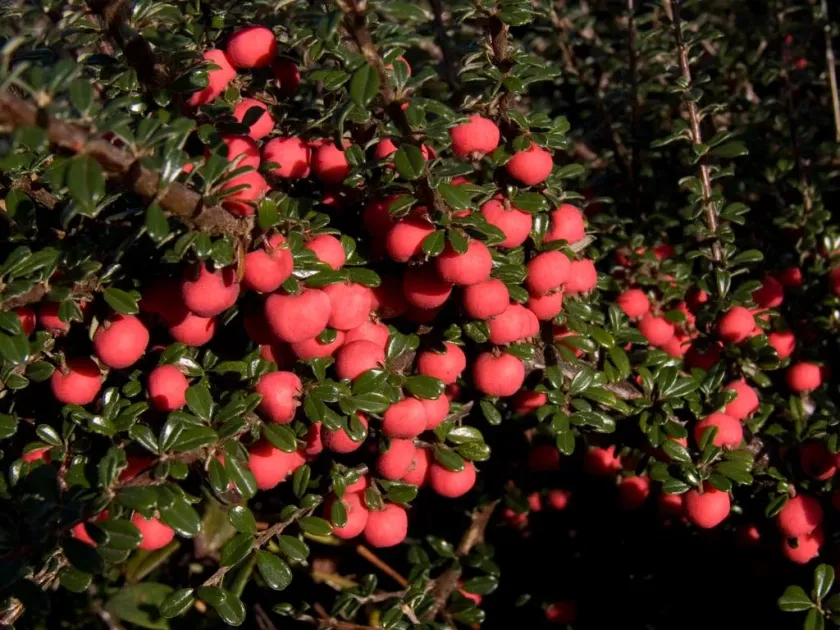
Tibetan cotoneaster (Cotoneaster conspicuus) is a hardy shrub belonging to the Rosaceae family. This species is highly valued in horticulture for its dense, arching growth habit and its spectacular display of bright red berries that persist throughout the winter season.
Native to the mountainous regions of China, this plant is well-adapted to cooler climates. It thrives in positions that provide full sun or partial shade, making it a flexible choice for various garden settings, including rock gardens and slopes.
The plant requires well-draining soil to perform at its best. While it can adapt to various soil types, it prefers fertile, slightly alkaline to neutral substrates. Proper site preparation, including the incorporation of organic matter, ensures robust growth.
Maintenance involves routine pruning to maintain shape and encourage dense foliage. In regions with harsh winters, providing a layer of mulch around the base of the plant helps protect the root system from deep freezes and moisture fluctuations.
Irrigation should be managed carefully; young plants require consistent watering during their first year. Once established, the shrub exhibits moderate drought tolerance, although supplemental watering during prolonged dry spells is beneficial for fruit production.
Main diseases and pests
Common pests affecting this species include aphids and scale insects, which can weaken the plant by sucking sap from tender new growth. Integrated pest management, including the use of horticultural oils, is highly effective for control.
Fungal issues, such as leaf spot or powdery mildew, may occur if air circulation around the shrub is inadequate. Maintaining proper spacing during planting is a primary preventative measure to ensure sufficient airflow.
Fire blight is a more serious concern for members of the Rosaceae family. Growers should monitor for wilted or blackened shoots and remove infected branches immediately, disinfecting tools between cuts to prevent spread.
Root rot remains a risk if the soil is poorly drained or subject to heavy waterlogging. Ensuring a site with excellent drainage is crucial for preventing these soil-borne pathogen issues that can lead to sudden plant decline.
Regular sanitation of the garden area, including the removal of debris from beneath the canopy, is an essential cultural practice to reduce the population of overwintering pests and disease spores.