
Rock cotoneaster
Cotoneaster horizontalis Decne.
Description
Growing requirements
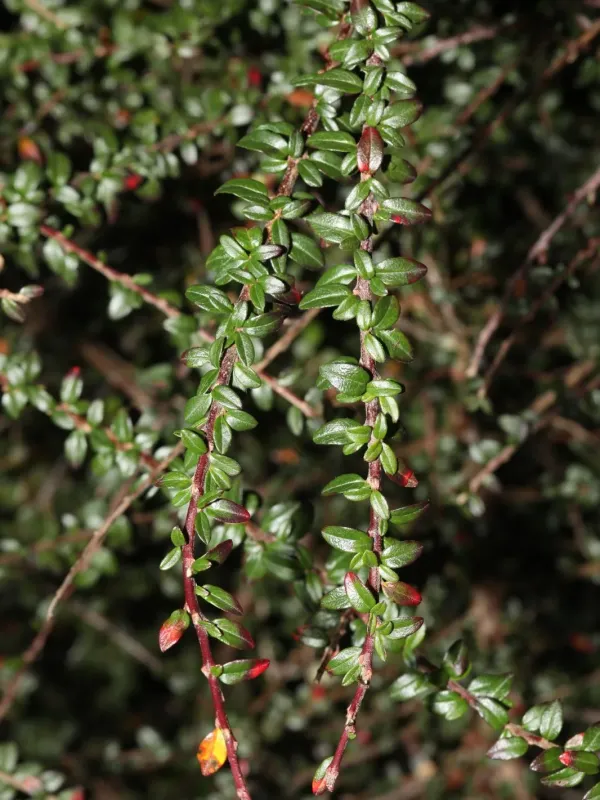
Rock cotoneaster (Cotoneaster horizontalis) is a member of the Rosaceae family. This low-growing, deciduous to semi-evergreen shrub is native to western China and is widely recognized for its unique fish-bone branch pattern.
The plant thrives in full sun or light shade. Optimal development requires well-drained soil, as the plant is highly sensitive to root rot caused by stagnant water. It adapts well to various soil types, including rocky slopes and heavy clay, provided they are sufficiently aerated.
Cultivation requires minimal intervention. Regular pruning is usually unnecessary unless the plant needs to be shaped or deadwood needs removal. In early spring, a balanced fertilizer application can enhance the plant's overall vigor and fruit production.
The species is highly valued for its winter interest. After the leaves drop, bright red berries persist through the cold season, providing visual appeal. It is commonly used as a ground cover, on embankments, or in rock gardens to suppress weeds.
Its hardiness makes it a reliable choice for temperate climates. It tolerates urban pollution well, making it a suitable candidate for roadside plantings and public park landscapes where low maintenance is a priority.
Main diseases and pests
Common pests include aphids and scale insects, which can weaken the plant by feeding on sap. Monitoring the underside of leaves during the spring is essential for timely detection and management of these pests.
The main disease threat is fire blight, a bacterial infection that causes branches to wilt and die back. Proper sanitation, such as removing affected branches and disinfecting tools, is critical to controlling the spread of the pathogen.