
Cotoneaster praecox
Cotoneaster praecox (Bois et Berthault) M. Vilm.
Description
Growing requirements
Cotoneaster praecox, commonly referred to as the Nanshan cotoneaster, is a low-growing, deciduous shrub belonging to the Rosaceae family. Native to the mountainous regions of Western China, this plant is valued for its exceptional ornamental qualities and adaptability in temperate climates.
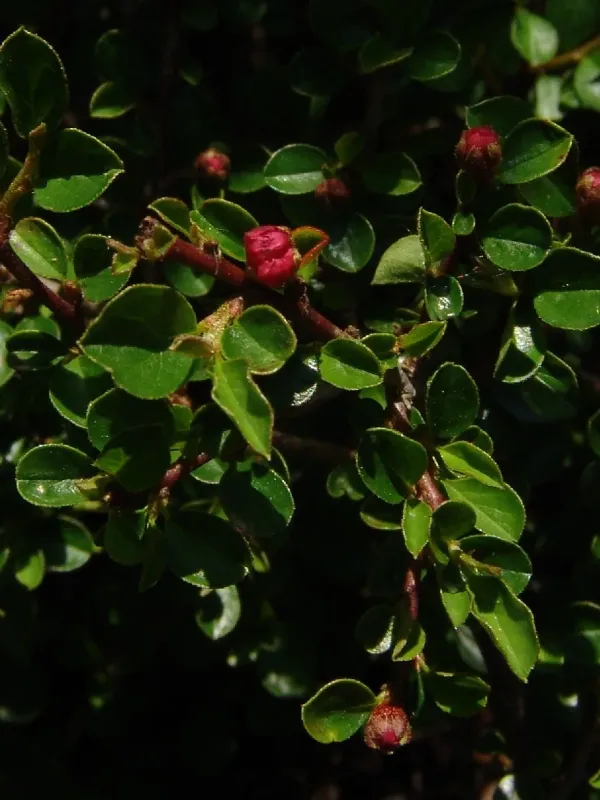
Botanically, it is characterized by its compact and spreading growth habit. The shrub produces small, dark green, glossy leaves that transition into vibrant shades of red and orange during the autumn months, providing significant aesthetic value to landscape compositions.
Regarding its cultivation requirements, Cotoneaster praecox prefers locations with full sun to partial shade. While it is highly tolerant of various soil types, it performs best in well-drained, fertile soil that does not suffer from prolonged waterlogging, which could compromise root health.
Agrotechnical care involves basic maintenance such as moderate watering during dry spells and applying balanced fertilizers in early spring. The shrub responds well to pruning, which can be done to maintain a desired shape or to stimulate denser vegetative growth during the following season.
In landscape architecture, it is widely utilized for ground cover, rock gardens, and low-maintenance hedges. Its ability to thrive in diverse conditions makes it an excellent choice for stabilizing soil on slopes and for aesthetic layering in perennial garden beds.
Main diseases and pests
Although Cotoneaster praecox is generally considered a robust species, it is susceptible to certain pathogens common to the rose family. Powdery mildew is the most frequent fungal issue, often occurring when air circulation around the foliage is restricted due to overcrowding.
Common pests that may affect the health of the shrub include aphids and various species of mites. These pests typically cluster on the tender, developing shoots, causing visible curling of the leaves and potentially stunting the overall growth of the plant.
To prevent these threats, maintaining proper plant spacing is essential. Ensuring that the crown receives sufficient sunlight and airflow is the most effective cultural method to mitigate the risk of fungal outbreaks and pest infestations.
Chemical control measures should be employed only when necessary. If an outbreak occurs, applying targeted fungicides or horticultural oils can effectively manage the problem without causing significant harm to the surrounding environment or beneficial insects.
Consistent monitoring throughout the growing season is crucial for early detection. By removing affected branches promptly and ensuring that the plant is not under stress from drought or nutrient deficiency, gardeners can keep their Cotoneaster healthy and flourishing.