
Thymelaea villosa
Thymelaea villosa
Description
Growing requirements
Thymelaea villosa is a perennial plant belonging to the Thymelaeaceae family. Native to the Mediterranean basin, this species is well-adapted to arid environments, rocky terrains, and poor soil conditions where moisture availability is limited.
The crop thrives in full sun and requires exceptionally well-drained, lime-rich soils. It is highly intolerant of waterlogging, which often leads to rapid physiological stress and potential mortality due to fungal infection of the root system.
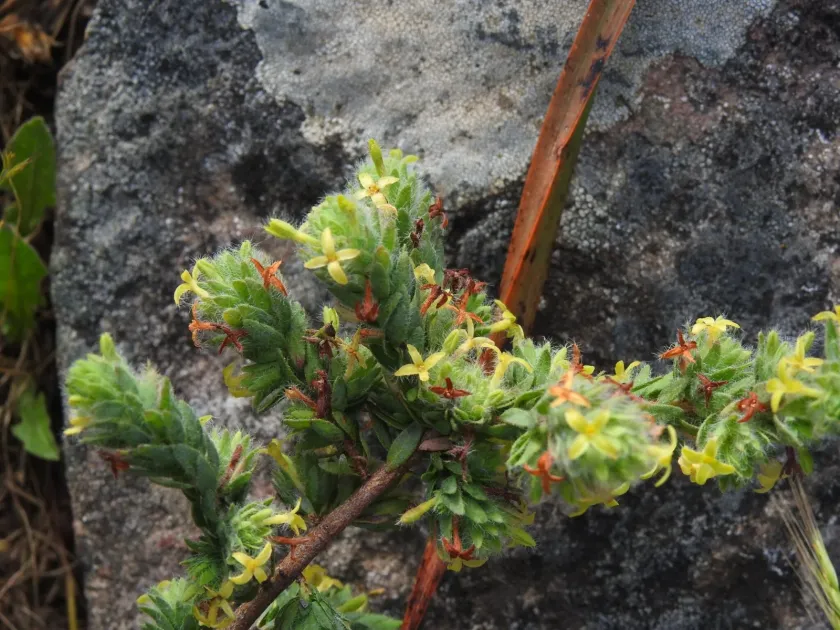
Botanically, the plant is characterized by its villous (hairy) leaves and stems. This pubescence serves as a vital morphological adaptation, reducing transpiration rates and protecting the plant from intense solar radiation and dry winds.
In terms of land use, Thymelaea villosa is primarily valued for soil stabilization and landscape restoration. Its ability to colonize degraded, nutrient-poor slopes makes it an excellent candidate for phytoremediation and anti-erosion projects.
Agricultural management for this species is minimal. Once established, the plant requires little to no irrigation or chemical fertilization, making it a sustainable choice for xeriscaping or low-input gardening in warm, Mediterranean-like climates.
Main diseases and pests
Pathogenic fungi, particularly Phytophthora species, represent the primary threat to the health of Thymelaea villosa. These pathogens become active under conditions of poor soil aeration or excess soil moisture, leading to crown and root rot.
Pests that typically affect this species include sap-sucking insects and mites. However, the plant is naturally resilient to many common agricultural pests due to the secondary metabolites present in its tissues, which act as a chemical defense mechanism.