
Thymelaea dioica
Thymelaea dioica
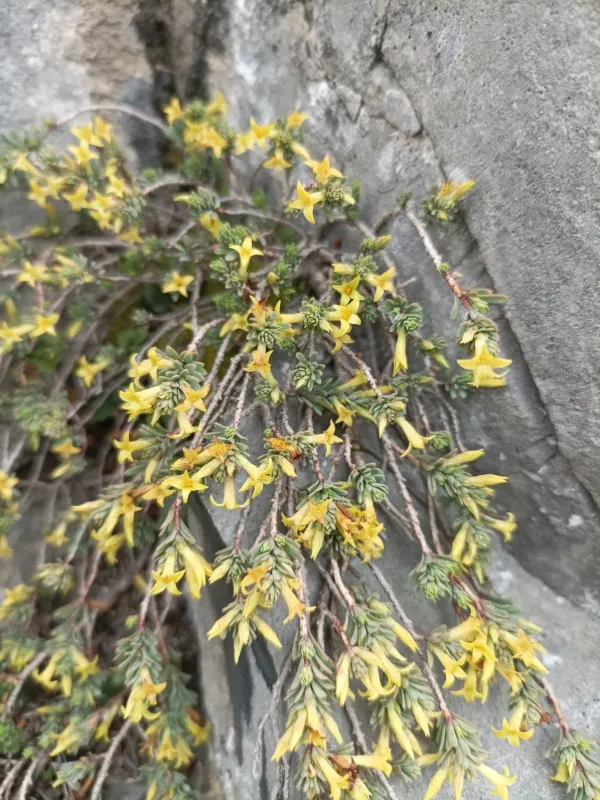
Description
Growing requirements
Thymelaea dioica is a perennial shrub belonging to the Thymelaeaceae family. Naturally occurring in Mediterranean environments, this plant has evolved to thrive in arid and semi-arid conditions. It is characterized by its woody structure and its capacity to maintain metabolic activity under intense sunlight and minimal moisture availability.
Botanically, the plant features narrow leaves and a compact growth habit, which are classic adaptations for water retention. The plant species is dioecious, meaning male and female reproductive organs develop on separate individual plants, which is a critical factor to consider for propagation and seed set in agricultural nurseries.
Soil requirements for Thymelaea dioica are specific and demanding. The species requires excellent drainage, typically preferring rocky, calcareous, or sandy soils with a neutral to alkaline pH level. Soils that are heavy, clay-based, or prone to waterlogging are unsuitable and will likely lead to the rapid decline of the plant’s health due to root rot.
The climate requirement centers on full sun exposure and dry, warm conditions. The plant is not frost-tolerant and requires protection in regions where temperatures drop significantly below freezing. Establishing the crop in a location with high thermal sum and low humidity levels throughout the growing season is essential for long-term survival.
In terms of agricultural and landscape use, Thymelaea dioica is utilized in xeriscaping projects and arid climate restoration. While it is not a major commodity crop, it possesses potential for medicinal research due to secondary metabolites found in its foliage, making it a subject of interest for phytochemical analysis in botanical science.