
Thymelaea gussonei
Thymelaea gussonei
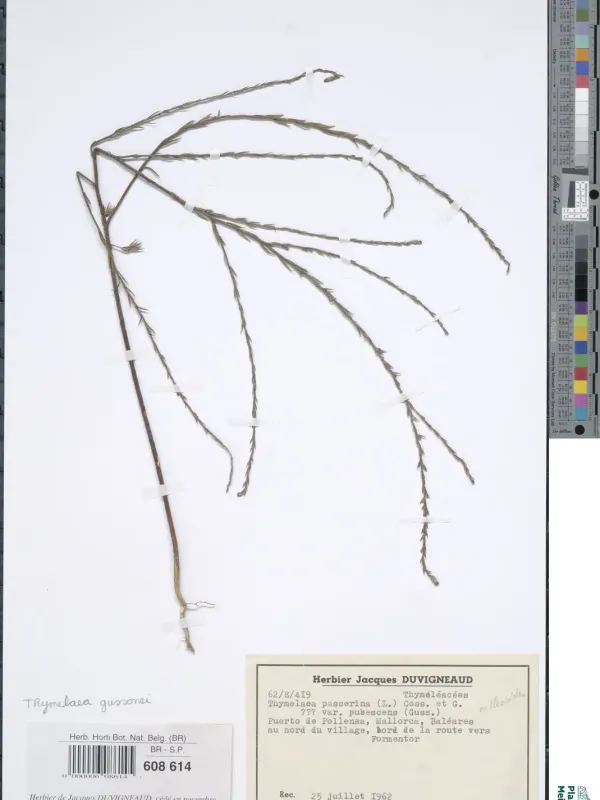
Description
Growing requirements
Thymelaea gussonei is a perennial shrub species belonging to the Thymelaeaceae family. It is a highly specialized endemic plant primarily associated with the rocky calcareous habitats of Sicily.
The plant demonstrates significant physiological adaptations to mountain environments, characterized by intense solar radiation and minimal soil coverage. It typically grows in crevices, anchoring itself firmly into the limestone substrate.
Cultivation of this species is extremely challenging and requires mimicking its natural habitat. The primary requirement is a highly porous, mineral-based substrate that prevents any water accumulation around the root collar.
Climatic preferences include high light exposure and distinct seasonal temperature fluctuations, typical of Mediterranean mountainous zones. Excessive nitrogen and heavy watering are detrimental to the plant's structural integrity.
Due to its slow growth rate and narrow ecological niche, Thymelaea gussonei has no industrial agricultural use and is primarily reserved for conservation and academic study within botanical collections.
Main diseases and pests
The main threats to Thymelaea gussonei include soil-borne fungal pathogens, such as Phytophthora, which thrive in poorly drained environments and can cause rapid necrosis of the root system.
Pest pressure is generally low in the wild, though in artificial settings, the plant may be vulnerable to infestations of mites or mealybugs, which require careful observation and non-aggressive management.
Environmental degradation, including erosion and the disruption of limestone rock faces, poses a direct threat to wild populations, limiting their ability to regenerate effectively.
The lack of genetic diversity within isolated populations makes the species susceptible to rapid changes in environmental factors, including shifts in average temperatures and moisture levels.
Strategic preservation involves strict adherence to dry-culture techniques and ensuring that air circulation is maintained at optimal levels to prevent the onset of damp-related diseases.