
Silver thymelaea
Thymelaea argentata
Description
Growing requirements
Silver thymelaea (Thymelaea argentata) belongs to the Thymelaeaceae family. It is a perennial subshrub specialized in thriving within extremely arid Mediterranean environments.
Its natural range is primarily located in Northern Africa and parts of the Iberian Peninsula, where it dominates rocky and sandy substrates with minimal annual rainfall.
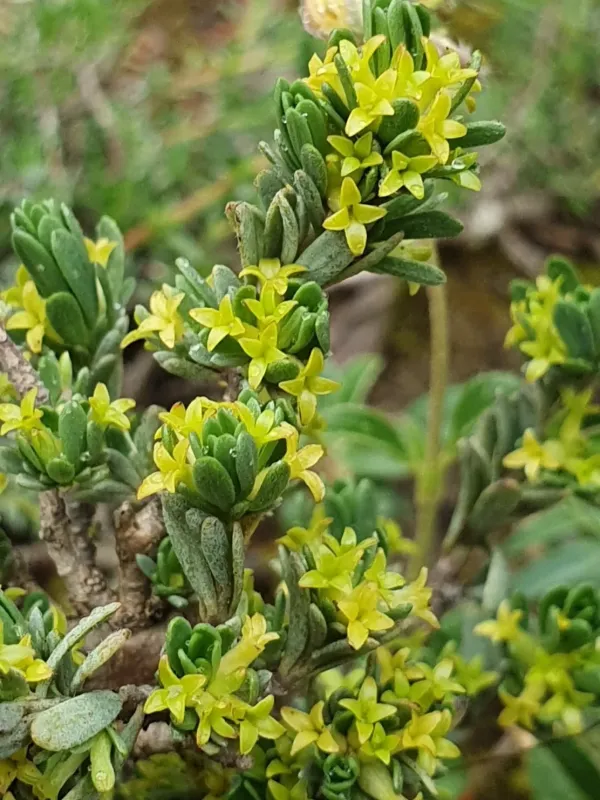
The botanical identity of this plant is defined by its silver-colored pubescence, which acts as a thermal shield and minimizes water loss through transpiration in harsh climates.
The species requires well-drained, porous soils and full sunlight exposure to maintain its physiological health and structural integrity during the growing season.
In terms of agricultural utility, it serves as a valuable resource for desertification control and the restoration of ecological niches in degraded arid landscapes.
Main diseases and pests
The main threats to the health of silver thymelaea populations are root pathogens, primarily triggered by waterlogging and poor soil aeration during cooler months.
While generally resistant to many agricultural pests, the plant may occasionally face pressure from sap-sucking insects if planted in overly dense or sheltered conditions.
Anthropogenic activities, including uncontrolled grazing and industrial soil disturbance, represent the most significant external threats to the species' habitat.
The slow growth rate of the plant means that competition from invasive weed species can be a major factor in the mortality of young, establishing seedlings.
To ensure healthy growth, cultivators should focus on mimicking the plant's native arid conditions and avoiding any amendments that increase moisture retention near the roots.