
Thymelaea lanuginosa
Thymelaea lanuginosa
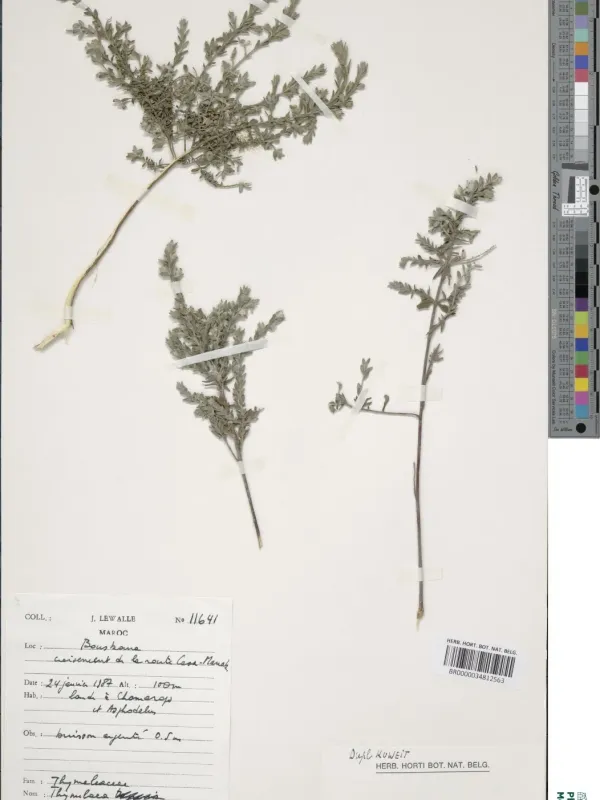
Description
Growing requirements
Thymelaea lanuginosa is a perennial shrub belonging to the Thymelaeaceae family. It is a highly specialized plant species adapted to the harsh environmental conditions of the Mediterranean region, where it has evolved to thrive in nutrient-poor and arid environments.
The plant requires well-drained, stony, or sandy soils to ensure root health. It is highly intolerant of waterlogged conditions, which can lead to rapid decay of the root system. Ideal locations are those that receive full, direct sunlight throughout the day.
Regarding climate, this species is well-suited to Mediterranean-type climates characterized by hot, dry summers and mild, wet winters. It demonstrates significant drought resistance due to its morphological adaptations, which minimize water loss through transpiration.
The botanical structure of Thymelaea lanuginosa includes dense, woolly-like pubescence on its stems and leaves. This characteristic serves as a protective mechanism against intense solar radiation and excessive desiccation, allowing the plant to maintain physiological function under stress.
In terms of agricultural management, the species is generally considered a low-input plant. It requires minimal fertilization and performs best when treated as a xerophytic ornamental or a specialized botanical crop where natural habitat conditions can be replicated.