
Thymelaea hirsuta
Thymelaea hirsuta
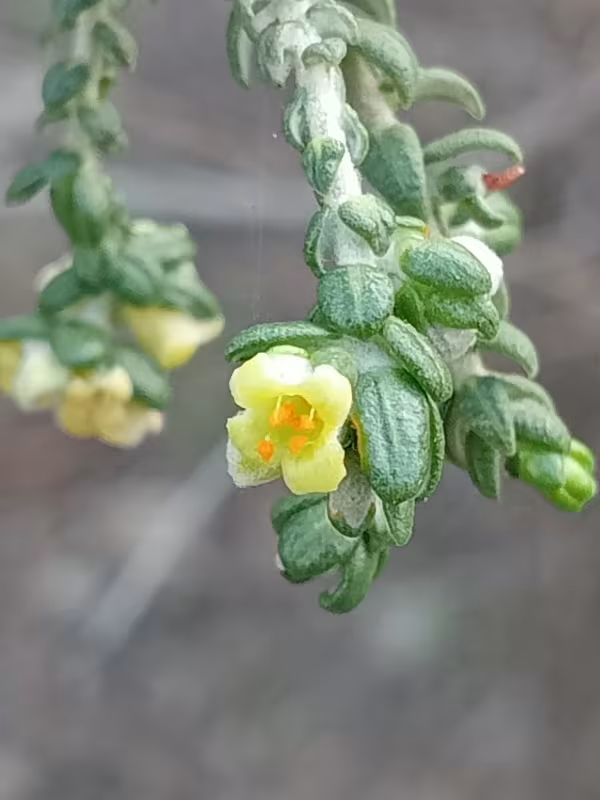
Description
Growing requirements
Thymelaea hirsuta, commonly known as the shaggy sparrow-wort, belongs to the Thymelaeaceae family. It is a perennial, evergreen shrub widely distributed across the Mediterranean basin and North African deserts.
The species is exceptionally well-adapted to xeric environments. It features distinctive, densely hairy leaves that reduce transpiration, allowing the plant to thrive in regions with high temperatures and limited precipitation.
Cultivation requires well-drained, sandy, or rocky soil conditions. The plant is halophytic and highly tolerant of saline environments, making it an excellent candidate for landscape restoration in coastal or arid desert regions.
Botanically, Thymelaea hirsuta is characterized by its woody base and upright to trailing branches. Its small, inconspicuous flowers appear in clusters, contributing to its role as a stable, low-maintenance vegetation cover.
Economically, the plant is historically valued for its fibrous bark, which has been used in cordage and paper production. Currently, there is an increasing interest in its use for xeriscaping and environmental stabilization projects.
Main diseases and pests
The primary threat to the health of Thymelaea hirsuta is waterlogging. Excessive moisture in the root zone quickly leads to root rot, which is often fatal to established shrubs accustomed to arid conditions.
Pests are rarely a significant problem due to the presence of irritant compounds within the plant's tissues. However, in enclosed nursery environments, pests like aphids or spider mites might occasionally impact development.
Weed infestation presents the most significant competitive threat during the early establishment phase. As a slow-growing shrub, it requires a clean, weed-free environment to develop its root system during the first year.
Disease prevention is primarily achieved through site selection and soil management. Ensuring adequate drainage and avoiding high-humidity microclimates significantly reduces the risk of fungal infections.
Regular visual inspection of the plant canopy is recommended to identify signs of physiological stress or accidental nutrient imbalances. Proper spacing between plants is essential to ensure adequate airflow and light penetration for optimal growth.