
Thymelaea passerina
Thymelaea passerina
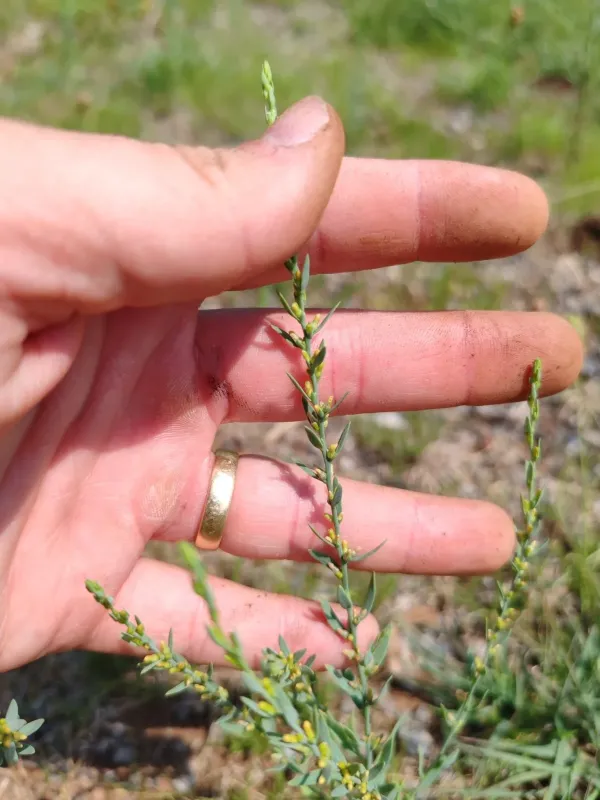
Description
Sowing dates
Thymelaea passerina is an annual herbaceous weed that naturally germinates in early spring when soil temperatures stabilize.
Seedlings typically emerge in late March or April, depending on regional climatic conditions and soil warming rates.
The plant has a prolonged germination period, which allows it to establish competitive populations within various agricultural crops.
Flowering usually occurs from early summer to late August, setting the stage for seed dispersal across field edges and cultivation rows.
Seeds are capable of remaining viable in the soil seed bank for multiple seasons, necessitating long-term weed management strategies.
Growing requirements
Belonging to the Thymelaeaceae family, this species thrives in environments where other weeds may struggle due to low moisture.
The species prefers well-drained, sunny habitats and is frequently found in rocky, sandy, or calcareous soil types.
It exhibits strong drought tolerance, utilizing a deep taproot to reach water resources deep within the soil profile.
Optimal growth occurs in neutral to alkaline soils, reflecting its evolutionary adaptation to arid and semi-arid landscape niches.
The plant does not require high levels of soil fertility, often colonizing disturbed sites with limited nitrogen availability.
Main diseases and pests
As a competitive weed, Thymelaea passerina significantly impacts the yield of cereals by competing for sunlight, water, and nutrients.
Mechanical control through deep tillage is generally effective, provided it is performed before the plants reach the reproductive stage.
Chemical control programs should focus on early post-emergence herbicide applications to maximize efficacy and minimize crop damage.
Integrated weed management, including crop rotation and the use of cover crops, is essential for reducing long-term weed pressure.
The plant can act as an alternative host for certain agricultural pests, which requires monitoring as part of broader integrated pest management.