
Thymelaea mesopotamica
Thymelaea mesopotamica
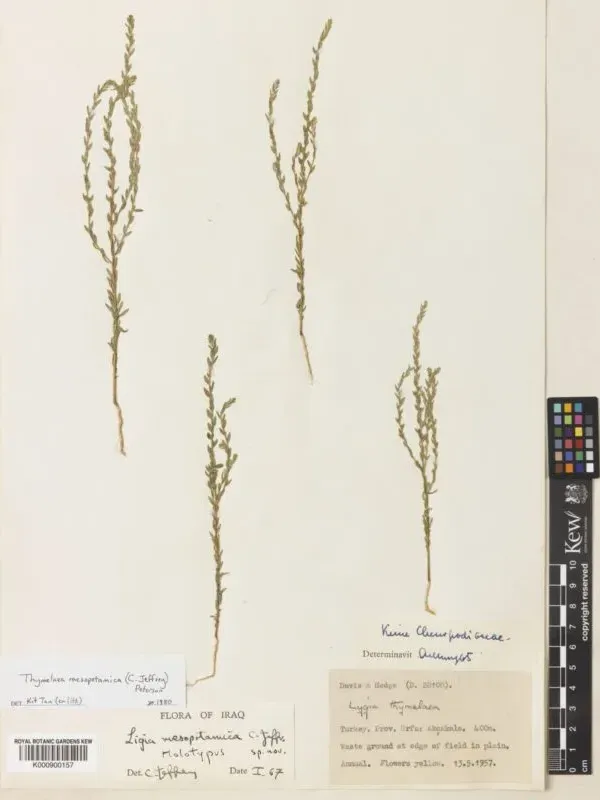
Description
Growing requirements
Thymelaea mesopotamica is a perennial subshrub belonging to the Thymelaeaceae family. It is a highly specialized plant, evolutionarily adapted to survive in the harsh, arid environments characteristic of the Mesopotamian region.
The plant thrives in rocky, sandy, and well-drained soils, often acting as a stabilizing factor in ecosystems prone to erosion. Its natural distribution is largely concentrated in desert and semi-desert zones of Western Asia.
Botanically, this species is noted for its lignified stems and small leaves, which are structurally optimized for water conservation. The deep-reaching root system provides stability and access to deep-seated water reserves in arid ground conditions.
For successful cultivation, excellent soil drainage is the primary requirement. Thymelaea mesopotamica cannot tolerate waterlogged conditions, making high-quality drainage systems essential for soil preparation before planting.
The crop demands full sun exposure to maintain its physiological functions and vigor. It is well-adapted to extreme solar radiation and high temperatures, making it a viable candidate for cultivation in arid, sun-drenched agricultural landscapes.
Harvesting
The primary agricultural interest in Thymelaea mesopotamica lies in its secondary metabolites, which are extracted for pharmaceutical or industrial research. Careful management of the harvest cycle is critical to ensure high yields of these compounds.
Harvesting is typically performed during the peak flowering stage when the concentration of target biochemical substances is highest within the plant's tissues. Due to the plant's delicate growth structure, manual harvesting methods are generally preferred.
After harvesting, the biomass requires immediate drying in a shaded, well-ventilated area to prevent degradation of the essential chemical components caused by moisture or intense heat exposure.
Workers should handle the plant material with care, as species in the Thymelaeaceae family often possess sap that can cause skin irritation or allergic reactions if direct contact occurs during handling or processing.
Storage of the processed plant material must take place in controlled, dry environments. Preventing moisture intake and protecting the material from light are essential measures to maintain the integrity and shelf-life of the harvested product.