
Thesium refractum
Thesium refractum
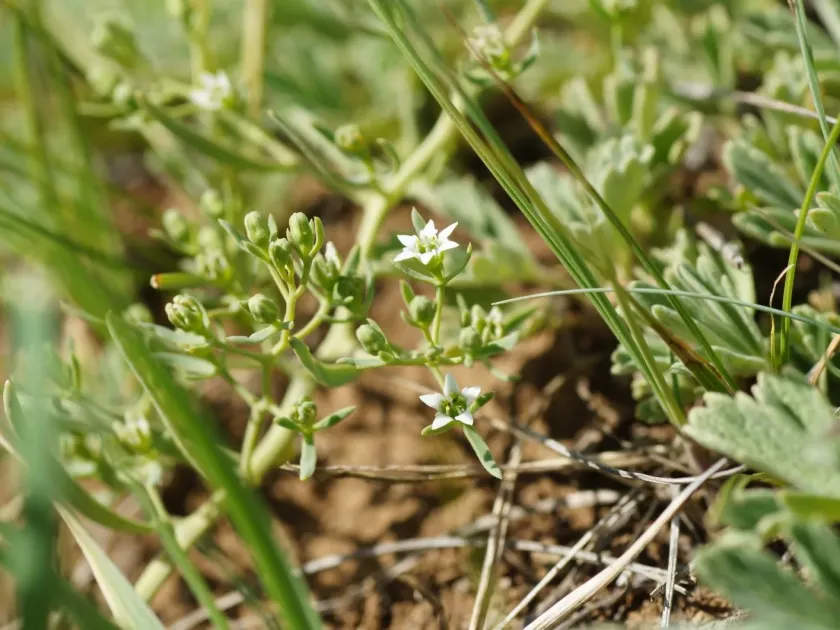
Description
Growing requirements
Thesium refractum is a perennial herbaceous plant belonging to the Santalaceae family. Known for its distinct hemiparasitic lifestyle, it extracts water and nutrients from the roots of host plants via specialized organs called haustoria.
Originating from the vast Eurasian steppes and forest-steppe regions, the plant is adapted to arid, rocky, and semi-desert soils. It thrives in open, sunny locations where it can successfully establish connections with neighboring vegetation.
Botanically, the plant is characterized by its refracting (bent) pedicels, which distinguish it from other species within the genus. Its leaves are narrow and linear, demonstrating a clear evolutionary adaptation to dry climates and limited soil moisture.
The environmental requirements of Thesium refractum are strictly linked to its dependency on host plants. Without a sustainable community of compatible neighbors, the species struggles to complete its generative development successfully.
From an agronomic perspective, this species is not cultivated as a commercial crop. It is primarily managed or studied within the context of grassland biodiversity conservation and restoration of native steppe ecosystems.
Main diseases and pests
Major threats to Thesium refractum include the conversion of natural grasslands into agricultural land. Such activities disrupt the delicate balance between the parasite and its host, leading to local extinction.
Overgrazing by livestock represents another significant threat, as it alters the botanical composition of the grassland, often eliminating the host species required by Thesium refractum to survive.
The species faces pressure from invasive weeds that may outcompete native plants for root space, thereby indirectly impacting the survival rate of the hemiparasite in its natural habitat.
Pests such as phytophagous insects targeting seeds or flowers can significantly reduce reproductive success, though this is considered a natural population regulation mechanism.
Climate change, specifically prolonged droughts or shifts in seasonal precipitation patterns, poses a long-term risk to the resilience of ecosystems where Thesium refractum persists.