
Thesium corsalpinum
Thesium corsalpinum
Description
Growing requirements
Thesium corsalpinum is a herbaceous perennial plant belonging to the Santalaceae family. This species is primarily recognized for its limited geographic distribution, being endemic to the mountainous regions of Corsica, where it thrives in specialized ecological niches.
The plant is classified as a hemiparasite, meaning it can perform photosynthesis due to its chlorophyll content, but it simultaneously relies on host plants. It derives water and mineral nutrients by attaching its haustoria to the root systems of surrounding vegetation.
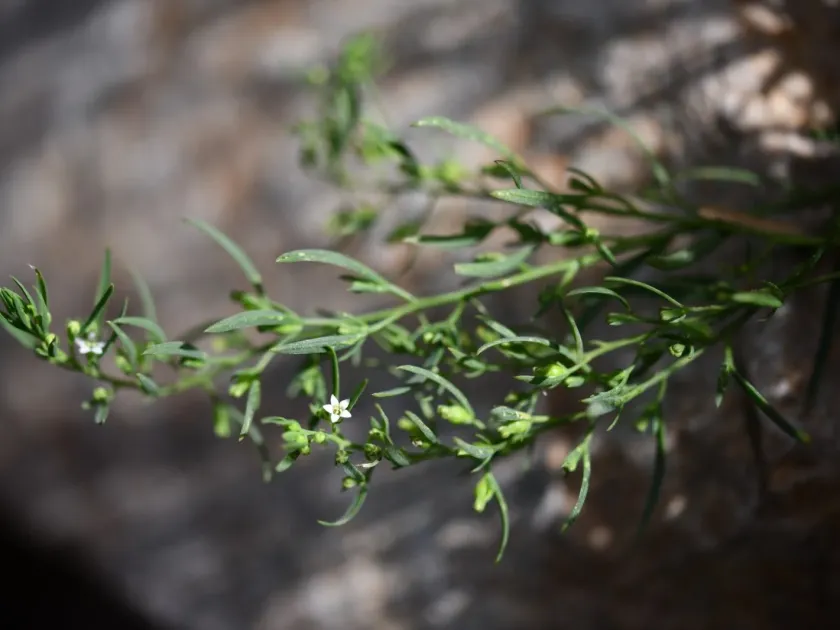
Botanically, the species features slender stems and narrow leaves. The inflorescences are composed of small, modest flowers that are typically greenish-white in color. Due to its slow growth and dependence on hosts, it does not function as a standard agricultural crop.
The environmental requirements for Thesium corsalpinum involve well-drained, rocky soil with low nutrient levels. It is highly adapted to the harsh conditions of high-altitude environments, where it must withstand significant fluctuations in temperature and intense UV exposure.
From an agronomic perspective, this plant is not used for large-scale production. However, it is an important subject in ecological research concerning biodiversity and vegetation dynamics. Its conservation is vital for protecting the unique floristic heritage of the Mediterranean mountain ranges.