
Thesium divaricatum
Thesium divaricatum
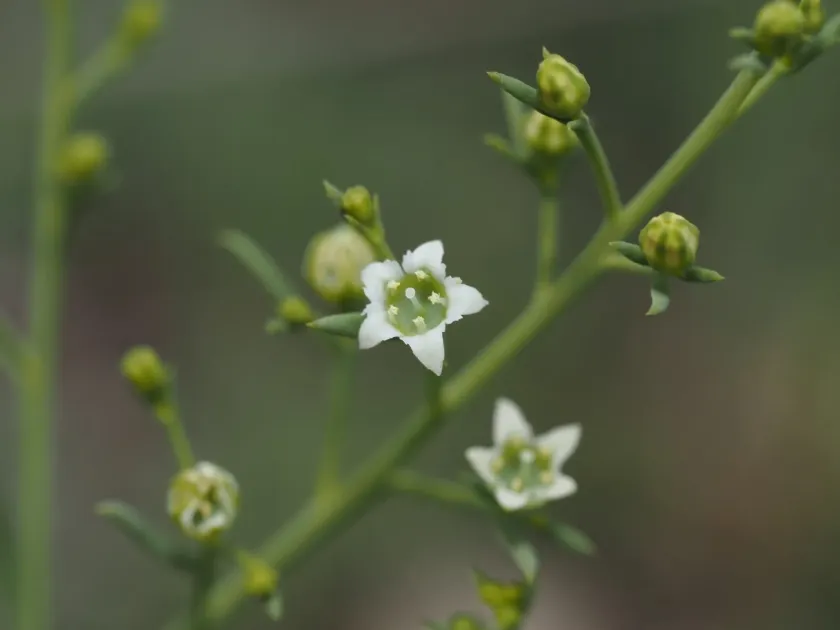
Description
Growing requirements
The plant requires high levels of solar radiation and does not tolerate competition from tall, shading vegetation. It thrives in open areas where it can receive direct sunlight throughout the majority of the day.
Soil requirements focus on alkalinity and excellent drainage. It shows a strong preference for limestone-rich soils where water does not accumulate; soggy or waterlogged conditions are highly detrimental to its long-term survival.
The climate should be Mediterranean-influenced, characterized by hot, dry summers and mild winters. Its biological structure is finely tuned to manage heat stress, making it an excellent survivor in rocky, exposed landscapes.
There is no standard agrotechnical method for cultivating this species. Its reliance on specific host plants makes it nearly impossible to raise in conventional agricultural settings without recreating the complex natural root environment of its donors.
Maintenance of local populations depends entirely on habitat preservation. Protecting the landscape from soil compaction, heavy tillage, and the elimination of native host species is vital to ensure its continued presence.
Main diseases and pests
Habitat loss due to urbanization and intensive farming represents the primary threat. When the native vegetation that supports the plant's hemiparasitic needs is cleared, the species is lost alongside its hosts.
Fungal pathogens pose a significant threat during periods of unexpected, prolonged rainfall. High humidity leads to stem and root decay, which breaks the physical link between the parasite and its host, resulting in quick mortality.
Invasive species can outcompete Thesium divaricatum for light and space. Since it is a slow-growing plant, it cannot adapt quickly to rapidly changing site conditions caused by aggressive weeds or agricultural encroachment.
Chemical fertilizers used in nearby fields disrupt the delicate root balance. Excess nutrients in the soil may affect the plant's need to seek hosts, potentially weakening its ability to establish or maintain essential haustorial connections.
Pests such as certain sap-sucking insects or flower-feeding beetles can reduce seed production. While not lethal on an individual scale, such pressure can endanger smaller, isolated populations by reducing genetic turnover.