
Bractless bastard toadflax
Thesium ebracteatum
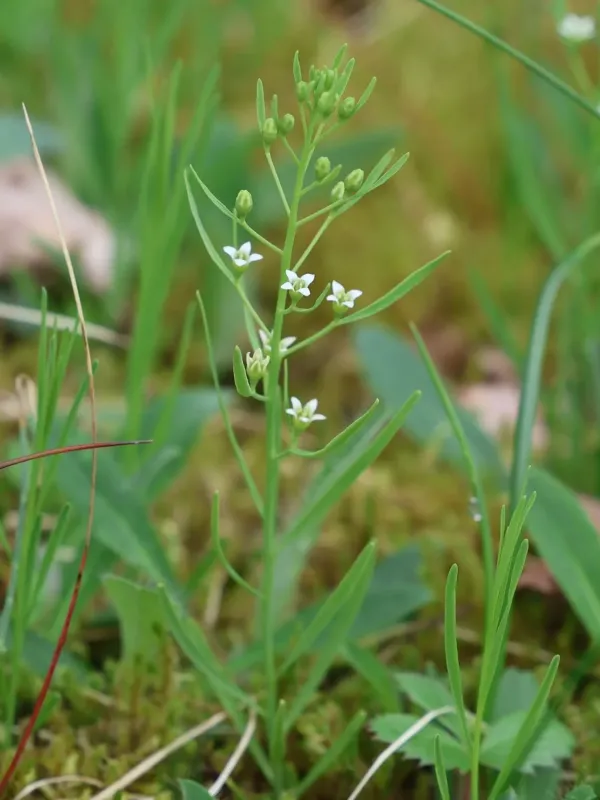
Description
Growing requirements
Bractless bastard toadflax (Thesium ebracteatum) is a perennial herbaceous plant belonging to the Santalaceae family. It is strictly a wild species and is not considered a cultivated agricultural crop due to its unique hemiparasitic biological nature.
The plant survives by attaching its roots to the root systems of surrounding plants using specialized organs called haustoria. Through these structures, Thesium ebracteatum extracts water and essential minerals from its hosts, allowing it to survive in various dry grassland environments.
In terms of habitat, the species thrives in well-lit areas such as dry meadows, steppe slopes, and forest edges. It requires open spaces where it can access sufficient light and appropriate host plant species to complete its complex biological life cycle.
Soil preferences include well-drained, carbonate-rich soils. The plant shows a strong intolerance for waterlogged environments or highly acidic substrates, which limits its distribution primarily to alkaline or neutral soil types within its European range.
Regarding climate, the plant is well-adapted to temperate conditions, exhibiting significant cold hardiness. It is resilient against temporary summer drought, as its parasitic strategy allows it to maintain hydration even when topsoil moisture is scarce.