
Thesium dollineri
Thesium dollineri
Description
Growing requirements
Thesium dollineri is a herbaceous perennial plant that belongs to the Santalaceae family. This species is recognized for its specialized ecological niche and its unique adaptation to open grassland habitats across Europe.
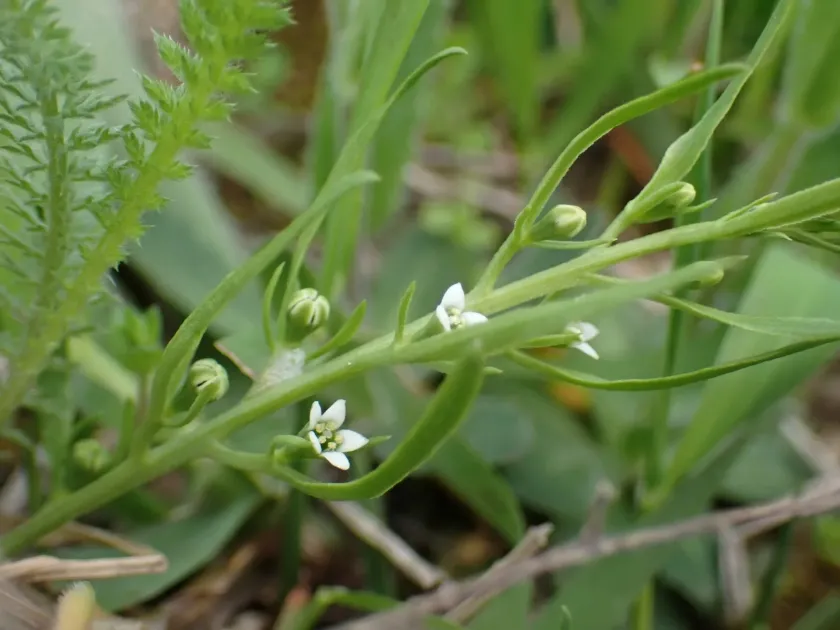
The plant typically features slender stems ranging from 5 to 20 cm in length. Its leaves are linear and narrow, typical of the genus, and the flowers are arranged in spike-like inflorescences which are key identification features.
As a semi-parasitic organism, Thesium dollineri relies on haustorial connections to extract water and nutrients from the root systems of nearby host plants. This physiological trait allows it to survive in nutrient-poor substrates.
The geographical distribution is concentrated in Central and Southeastern Europe. It is commonly found in dry, calcareous grasslands and open steppe-like landscapes where competition for space and sunlight is relatively lower.
The species requires well-drained, nutrient-poor soils and high levels of solar radiation. Conservation efforts for this plant focus on maintaining traditional grassland management practices to prevent encroachment by more competitive shrub or grass species.