
Alpine toadflax
Thesium alpinum
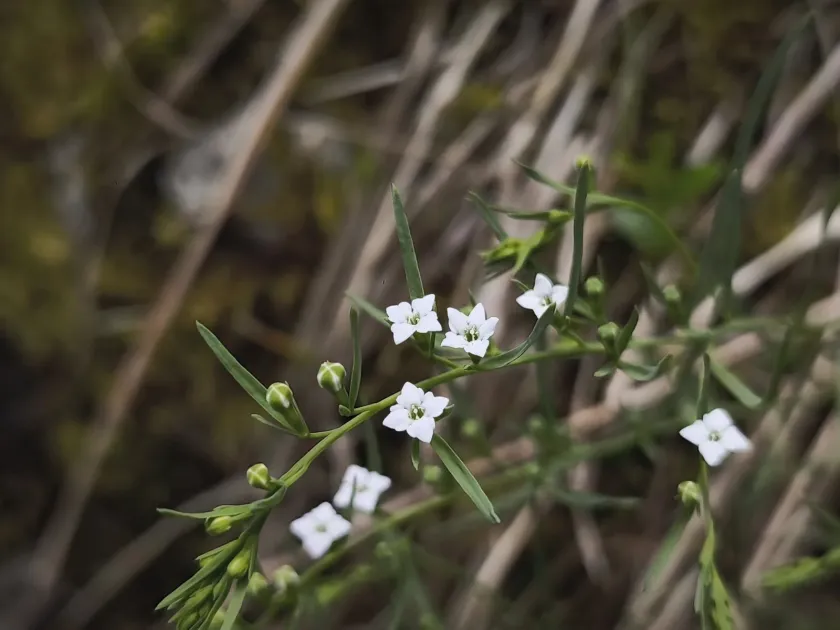
Description
Growing requirements
Alpine toadflax (Thesium alpinum) is a perennial herbaceous plant belonging to the Santalaceae family. It is predominantly found in alpine and subalpine meadows, where it has evolved to thrive in high-altitude environments.
Biologically, this species is classified as a hemiparasite. It forms root connections with host plants, extracting essential nutrients and water, which serves as a vital survival strategy in nutrient-deficient mountain soils where competition is high.
The plant thrives best in well-drained, rocky, or calcareous substrates. It demands high levels of direct sunlight and cannot tolerate poorly drained soils or waterlogged conditions, which are detrimental to its sensitive root system.
Regarding climate, the Alpine toadflax is highly adapted to short, intense growing seasons and freezing winters. Its dormancy period under snow cover allows it to survive extreme temperature fluctuations characteristic of mountainous regions across Europe and parts of Asia.
While not a traditional commercial crop, it is of interest to botanical research and horticulture. Its cultivation is primarily confined to rock gardens and specialized ecological collections due to its specific requirements and parasitic lifestyle, which make it difficult to integrate into standard agriculture.