
Thesium racemosum
Thesium racemosum
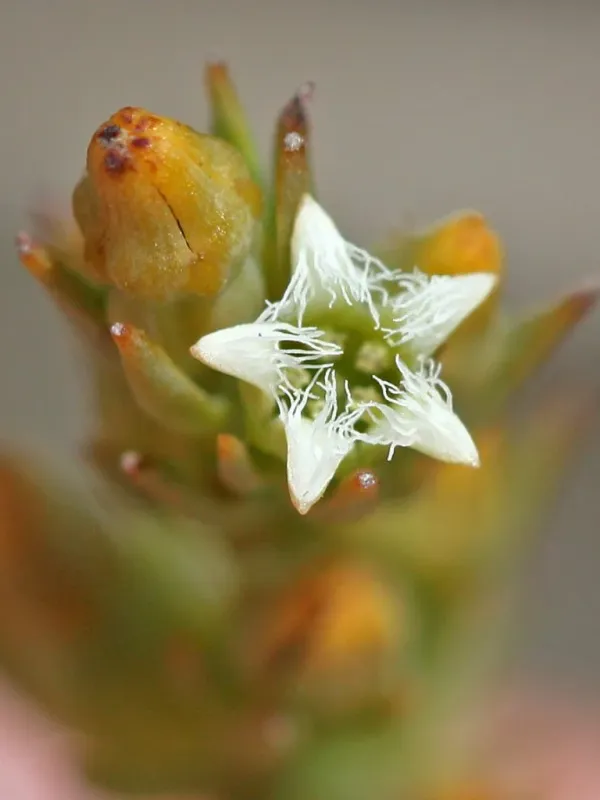
Description
Growing requirements
Thesium racemosum is a perennial herb belonging to the Santalaceae family. As a hemiparasitic species, it exhibits unique physiological adaptations that allow it to supplement its nutrient intake by attaching its roots to those of host plants.
The native distribution of this species includes areas with temperate and subtropical climates, where it thrives in grasslands and steppe habitats. Its ability to colonize nutrient-poor soils makes it a resilient component of its natural plant community.
Botanically, the plant is characterized by its slender stems and specialized haustoria, which are essential for extracting water and mineral elements from neighboring vegetation. It is highly efficient in resource allocation due to these evolutionary mechanisms.
The cultivation of this plant requires well-drained, porous soil types with a neutral to slightly alkaline pH. It is notably drought-tolerant, as its hemiparasitic nature allows it to withstand periods of low soil moisture more effectively than non-parasitic crops.
Optimal growth conditions involve exposure to full sunlight, as shade negatively impacts the plant's overall vigor. Proper spacing is critical to ensure that individual plants can establish sufficient host connections without competing excessively for sunlight and space.
Main diseases and pests
Common health issues involve fungal infections of the foliage, typically triggered by high humidity levels and poor airflow. Managing local humidity and avoiding overhead irrigation can significantly reduce the risk of such botanical threats.
Insect pests such as aphids or spider mites may occasionally target the succulent parts of the plant during active growth phases. Integrated pest management strategies, focusing on biological controls, are recommended for maintaining plant health in agricultural settings.