
Pyrenean toadflax
Thesium pyrenaicum
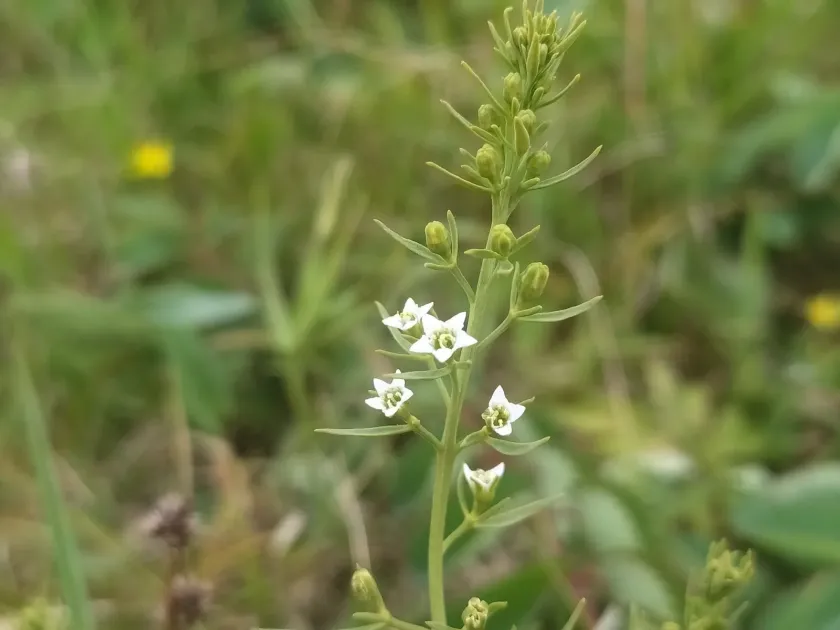
Description
Growing requirements
The Pyrenean toadflax (Thesium pyrenaicum) belongs to the Santalaceae family. This perennial herb is characterized by its hemiparasitic nature, meaning it supplements its own photosynthesis by obtaining water and minerals from the roots of host plants.
The species is native to mountainous regions across Europe, most notably the Pyrenees, the Alps, and various ranges throughout Central and Southern Europe. It is typically found in alpine meadows, rocky pastures, and calcareous grasslands.
The plant requires high solar exposure to thrive, as it is well-adapted to the harsh, open environments of high-altitude zones. It is highly resistant to frost and significant temperature fluctuations, which are common at higher elevations.
Soil requirements for this plant are centered on well-drained, nutrient-poor, limestone-rich substrates. It does not tolerate waterlogged soil, as its root system, including the haustoria used to attach to hosts, requires adequate soil aeration.
The cultivation of this plant is not a commercial agricultural practice. It is primarily studied by botanists and ecologists interested in grassland management and the preservation of complex plant-host interactions in montane ecosystems.
Main diseases and pests
The primary threats to the Pyrenean toadflax involve the degradation of its natural habitats due to the abandonment of traditional grazing practices or, conversely, overgrazing that leads to soil compaction and nitrogen enrichment.
Disease pressures for this species include various fungal infections, such as rust fungi and leaf spot diseases, which can thrive in moist microclimates and negatively impact the overall vigor of the host-parasite system.
Pests, such as sap-sucking insects and leaf miners, may occasionally infest the foliage. While these rarely pose a systemic threat to the plant, they can weaken the plant's capacity to host its root connections effectively.
Anthropogenic pressure remains a critical concern, as changes in land use often favor more aggressive, fast-growing flora that outcompete the slower-developing and specialized Pyrenean toadflax for light and space.
Climate change poses a long-term risk to this species, as warming temperatures may force it to retreat to higher altitudes where suitable host plants may be less available or ecological conditions less favorable for its development.