
Thesium procumbens
Thesium procumbens
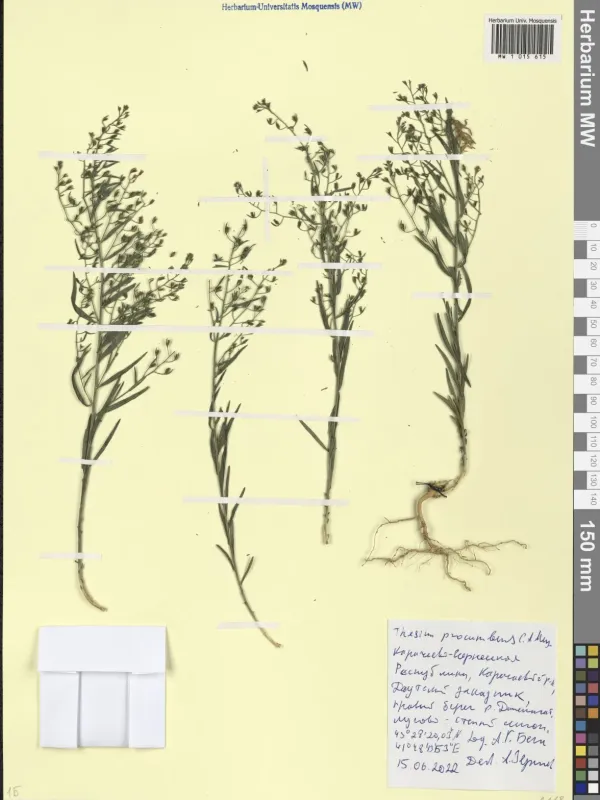
Description
Growing requirements
Thesium procumbens belongs to the Santalaceae family. It is a perennial herbaceous plant known for its hemiparasitic nature, utilizing specialized organs called haustoria to derive water and essential nutrients from the root systems of neighboring host plants.
The native range of this species extends across various steppe and forest-steppe zones of Eurasia. It is typically found in open, well-lit habitats, including stony slopes, dry meadows, and diverse grassland communities where it interacts with various vascular plants.
Botanically, the plant is characterized by prostrate or ascending stems and narrow leaves. Its root system is highly specialized, allowing the plant to thrive in nutrient-poor environments by supplementing its own photosynthetic production with resources stolen from hosts.
Regarding habitat requirements, Thesium procumbens prefers neutral to slightly alkaline soil conditions. It exhibits significant resilience to seasonal drought, a trait common to many plants within its taxonomic family that inhabit arid or semi-arid regions.
There are no standardized agricultural practices for this plant as it is not a cultivated crop. In natural settings, propagation is primarily via seed dispersal, which requires specific ecological conditions and the presence of suitable host species to ensure the survival of germinating seedlings.
Main diseases and pests
The primary threats to Thesium procumbens populations stem from habitat loss and degradation. Intensive agricultural expansion, including the plowing of grasslands and the use of broad-spectrum herbicides, significantly reduces the viability of its natural habitats.
As a wild species, it faces pressure from changing land-use patterns. There is no documented evidence of major economic pests or diseases affecting this species in an agronomic context, as its ecological niche is strictly confined to natural, non-cultivated environments.