
Thapsia villosa
Thapsia villosa
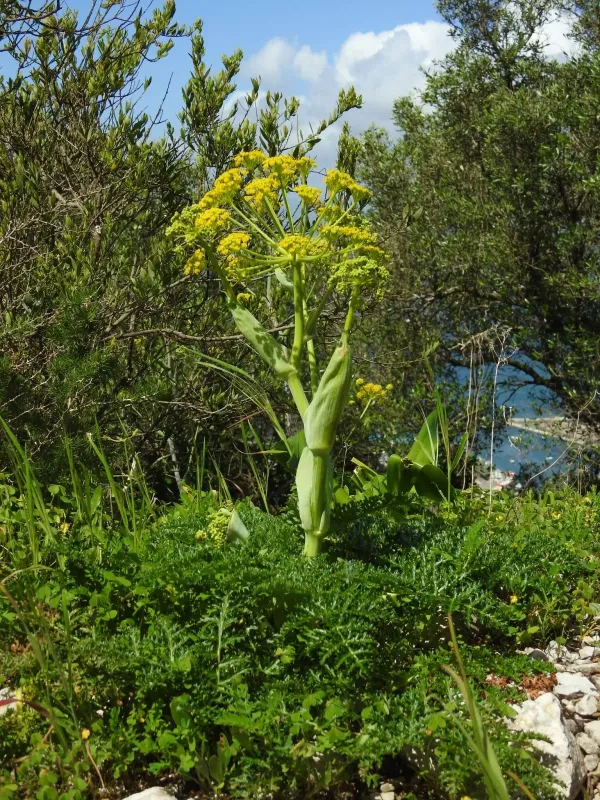
Description
Sowing dates
Thapsia villosa is a perennial herbaceous plant belonging to the Apiaceae family, known for its deep root system and characteristic foliage.
The seeds of this species require a period of cold stratification to break dormancy and achieve a high germination rate in the spring season.
For optimal results, growers should plant the seeds in autumn, placing them at a shallow depth of approximately 1 to 2 centimeters in well-drained substrate.
Standard field spacing involves maintaining rows about 50 centimeters apart, allowing each plant sufficient room to develop its large basal leaves.
Spring sowing is only successful if the seeds have been professionally pre-treated in cold storage, which mimics the natural winter cycle for the plant.
Growing requirements
Originating from the Mediterranean region, Thapsia villosa is naturally adapted to arid climates with long, hot summers and mild, rainy winters.
The plant thrives in sunny environments and requires soil with excellent drainage, such as sandy, rocky, or loose alluvial soil types.
It has very low tolerance for waterlogged conditions, which can lead to rapid decay of the taproot system in heavy or clay-heavy soils.
Although it is relatively hardy, the plant prefers sites where it can fully exploit its deep root architecture to reach lower layers of soil moisture.
Proper airflow is essential for the health of the plant, preventing the accumulation of humidity around the base of the stems during the growing season.
Main diseases and pests
Thapsia villosa is generally robust, but it can be susceptible to several pathogens if the environmental conditions are not properly controlled.
Root rot caused by fungal pathogens is the most significant threat, typically occurring in poorly drained or overly saturated agricultural fields.
Aphid infestations may occasionally occur during the peak of spring growth, potentially stressing the plant and affecting its photosynthetic capacity.
Viral diseases can also impact the growth cycle; therefore, managing insect vectors is a critical part of the overall integrated pest management strategy.
The best defense against these threats is the strict avoidance of soil compaction and ensuring that the field remains well-drained throughout the year.
Harvesting
The primary economic interest in Thapsia villosa lies in the harvesting of its roots, which are used for extracting specific medicinal compounds.
Harvesting typically takes place once the plant is fully matured, often requiring at least three seasons of growth to reach maximum root mass.
Mechanical harvesting tools must be adjusted to reach deep into the soil to ensure the entire root system is extracted without breaking it.
Once harvested, the roots must be cleaned immediately and processed in a drying facility where temperatures are kept controlled and low.
The harvested material is then processed into concentrated extracts, as the plant itself is not suitable for direct human consumption or fodder.