
Syzygium wilsonii hybrid
Syzygium wilsonii subsp. wilsonii x S. luehmannii (F. Muell.) L.A.S.Johnson
Description
Growing requirements
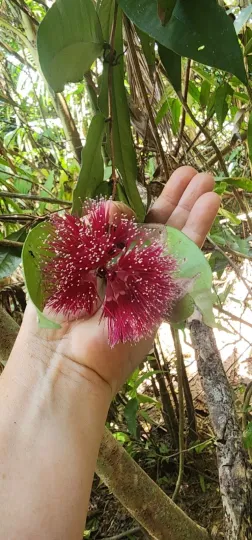
Syzygium wilsonii hybrid is a striking evergreen shrub belonging to the Myrtaceae family, resulting from the hybridization of Syzygium wilsonii and Syzygium luehmannii. It is highly regarded by landscape designers for its dense foliage and spectacular clusters of pink to deep red flowers that emerge during the warmer months.
Native to Australian landscapes, this hybrid requires a warm, temperate, or subtropical climate to thrive. It lacks significant frost tolerance, making it suitable for protected gardens or as a high-value container plant in regions with colder winters.
Successful cultivation depends heavily on soil composition. The shrub prefers a well-draining, nutrient-rich soil with a slightly acidic profile. Waterlogging is a primary enemy of this species, so proper drainage is essential for longevity and root health.
The plant thrives in bright, filtered sunlight. While it can tolerate morning sun, intense afternoon exposure in peak summer can lead to leaf scorch. Providing a site with dappled shade is the most effective way to maintain vibrant leaf color and overall plant vigor.
Regular irrigation is vital during the growing season to ensure the root ball remains moist but never saturated. Fertilization should be handled with care, using slow-release fertilizers formulated for acid-loving or native plants, as excessive phosphorus can harm the plant's delicate root hair structure.
Main diseases and pests
Scale insects are common pests for this hybrid, often clustering on the stems and undersides of leaves. Regular monitoring and the application of horticultural oils are standard methods for controlling these infestations effectively.
Spider mites can become a significant issue during hot and dry periods, causing the leaves to appear stippled and dull. Increasing humidity around the plant and ensuring adequate air circulation can act as a strong deterrent against these microscopic pests.
Fungal leaf spots are frequently associated with poor airflow and high humidity. If such conditions occur, it is crucial to remove the affected foliage immediately and improve the plant's spacing or ventilation to prevent further spreading of spores.
Root rot, driven by Phytophthora or other water-borne pathogens, is a critical threat when soil drainage is insufficient. In such cases, the plant often shows symptoms of wilting despite a moist soil, necessitating an immediate review of irrigation and drainage protocols.
Nutritional deficiencies, specifically iron or magnesium chlorosis, can occur if the soil pH becomes too high. Correcting the pH with soil amendments or applying chelated micronutrients usually resolves these yellowing symptoms in the foliage.