
Syzygium australe
Syzygium australe (J. C. Wendl. ex Link) B. Hyland
Description
Growing requirements
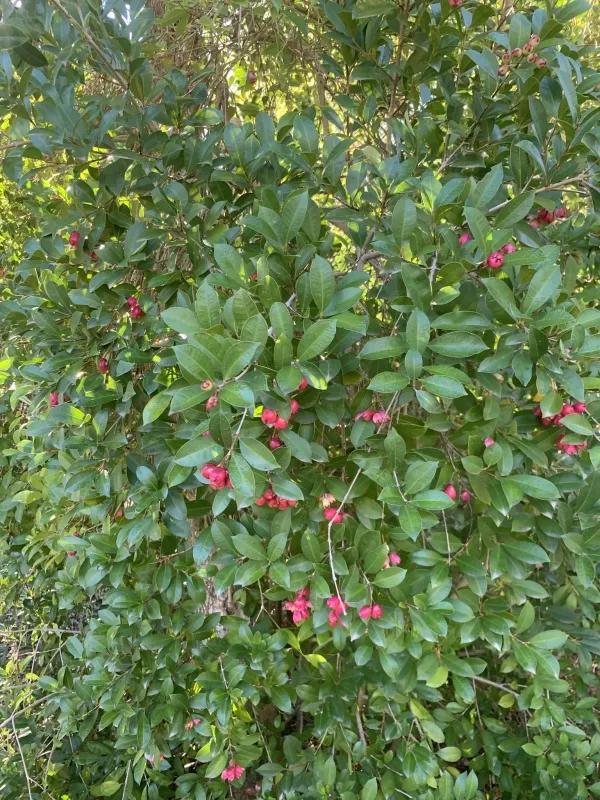
Syzygium australe is a robust evergreen tree or shrub belonging to the Myrtaceae family. Native to eastern Australia, this species is highly valued both for its aesthetic appeal and its edible fruits.
The plant thrives in subtropical climates, preferring nutrient-rich, well-draining soil. It is adaptable to various soil types, from sandy loams to heavier clays, provided that drainage is managed effectively to prevent root rot.
Botanically, it is characterized by glossy, elliptical leaves and small, white, fluffy flowers that appear in spring and summer. These are followed by attractive, edible berries that range from light pink to deep purple.
For successful cultivation, Syzygium australe requires plenty of sunlight or light shade. It is moderately drought-tolerant once established but performs best when provided with regular moisture during the growing season.
Maintenance involves periodic pruning, which encourages a denser habit and higher fruit yields. The plant responds exceptionally well to shearing, making it a staple in ornamental hedge construction.
Yield
The fruit of Syzygium australe, commonly known as the brush cherry, is highly prized for its crisp texture and mild, tart flavor. It is a staple in Australian bush-food markets and local agriculture.
Harvesting is typically done by hand. The fruits are used extensively in the production of jams, jellies, and beverages, offering a unique regional taste profile that is increasingly popular in gourmet markets.
Beyond food production, the species is widely used in landscaping as a screening plant. Its dense foliage acts as an effective windbreak and provides significant cover for local bird species.
The timber of this species is tough and durable. In historical contexts and specialized carpentry, it has been utilized for small tool handles and decorative wooden items.
Commercial nurseries categorize several cultivars based on growth rate, leaf color, and fruit sweetness, catering to both the edible crop sector and the domestic garden market.
Main diseases and pests
Pest management is a critical aspect of Syzygium farming. Psyllids are the most common issue, causing galls on the leaves that significantly reduce the plant's aesthetic and photosynthetic capacity.
Scale insects and mealybugs can also infest the foliage, particularly in humid, poorly ventilated environments. Proper spacing and airflow are essential prevention strategies.
Fungal diseases like myrtle rust (caused by Austropuccinia psidii) pose a serious threat to the species, necessitating strict biosecurity measures and monitoring in regions where it is prevalent.
To combat threats, integrated pest management (IPM) practices are encouraged, focusing on biological controls and the selection of resistant cultivars bred for regional health.
Regular monitoring of the canopy and rapid removal of infected debris are fundamental tasks that ensure the longevity and productivity of a Syzygium orchard or hedge.