
Pekin lilac
Syringa reticulata (Blume) H. Hara subsp. pekinensis (Rupr.) P. S. Green & M. C. Chang
Description
Sowing dates
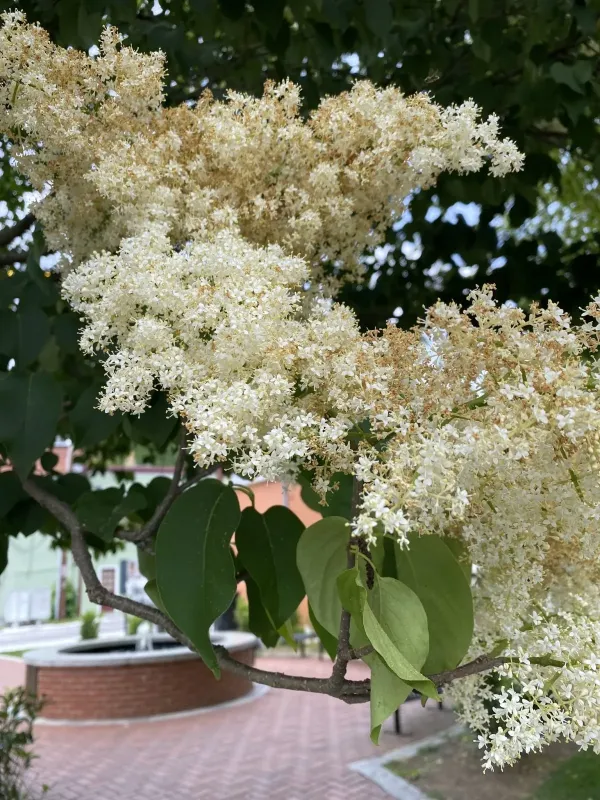
Pekin lilac (Syringa reticulata subsp. pekinensis) is a member of the Oleaceae family. Originating from Northern China, it is known for its beautiful, peeling bark and clusters of fragrant, creamy-white flowers. This species is often classified as a large shrub or a small tree.
Propagation is primarily done via seeds or softwood cuttings. Seeds require cold stratification for at least 60-90 days to break dormancy before sowing in early spring. This process mimics the natural winter conditions to ensure a high germination rate.
When propagating from cuttings, gardeners should select healthy, semi-hardwood stems during the active growing season. Applying a rooting hormone significantly increases success rates, especially when cuttings are kept in a humid, controlled environment.
Planting site selection is crucial for the long-term success of the tree. While it grows slowly in its initial years, it becomes very hardy once established. The planting hole should be twice the diameter of the root ball to allow for proper root expansion.
Spacing requirements vary depending on the intended use, but for hedge or mass planting, a distance of at least 3 meters is recommended to allow for adequate airflow and to prevent competition for nutrients between plants.
Growing requirements
Pekin lilac thrives in full sun exposure. While it exhibits tolerance to partial shade, providing at least 6 hours of direct sunlight is essential for optimal flower production and to maintain a dense, attractive foliage structure.
The soil should be well-draining, fertile, and slightly acidic to neutral in pH. The species is quite adaptable but performs best in loamy soils that hold moisture without becoming waterlogged during rainy periods.
Regular watering is necessary during the first two growing seasons, especially during dry spells. Once established, the Pekin lilac displays moderate drought tolerance, though mulch should be maintained to conserve soil moisture.
Pruning is best performed immediately after the flowering period ends. The primary goal is to remove spent blooms and maintain the tree’s structural integrity. Avoid heavy dormant-season pruning, as it can reduce the following year's blossoms.
Fertilization should be handled with care. A balanced, slow-release fertilizer applied once in early spring is usually sufficient to support healthy growth without causing excessive, weak vegetative development.
Main diseases and pests
Though remarkably hardy, this species can occasionally be affected by common lilac pests and pathogens. Proper site selection that ensures good air circulation is the most effective preventative measure against most issues.
Powdery mildew is the most common fungal disease, typically appearing during humid, warm summers. Improving airflow through selective pruning is often more effective than chemical treatments in controlling its spread.
Scale insects can sometimes infest the branches, leading to a decline in tree vigor. Monitoring the bark for unusual bumps or discolored patches during the late winter is recommended to catch infestations early.
Removing leaf litter from beneath the canopy in the autumn prevents many soil-borne diseases and overwintering pest sites. This sanitation step is a cornerstone of responsible integrated pest management in the landscape.
Always ensure the tools used for pruning are sanitized with an alcohol solution between plants. This simple practice prevents the mechanical spread of diseases from infected trees to healthy specimens in your garden.