
Komarov's lilac
Syringa komarowii C. K. Schneid.
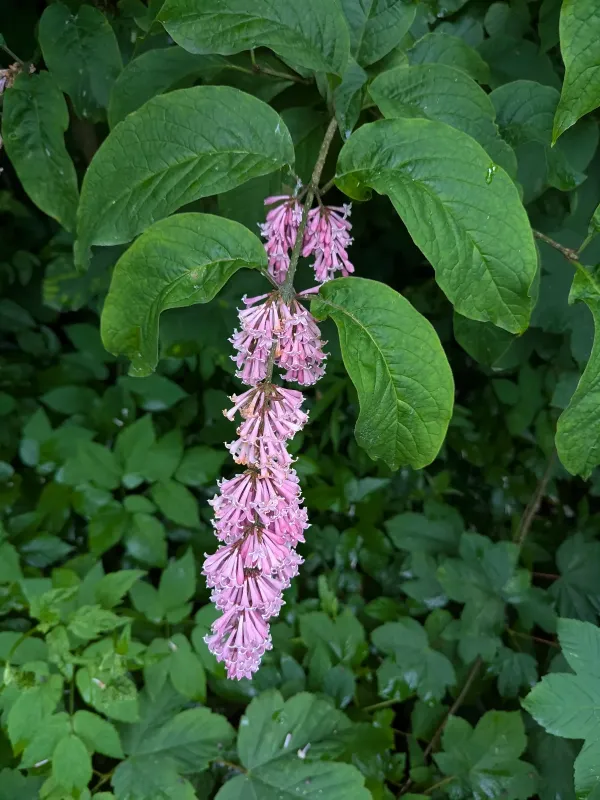
Description
Growing requirements
Komarov's lilac (Syringa komarowii) is a distinctive deciduous shrub belonging to the Oleaceae family. Native to the mountain ranges of Central and Western China, this species has evolved in high-altitude environments, which contributes to its remarkable adaptability and hardiness in varied landscapes.
Botanically, it is recognized for its arching branches and impressive, pendulous panicles of flowers. These blooms appear in late spring to early summer, displaying shades of pink to purple, making the shrub a focal point in any landscape design during its flowering period.
The cultural requirements of this species include a preference for well-draining, fertile, loamy soils with a near-neutral pH. While it is tolerant of partial shade, full sun exposure is ideal for promoting denser foliage growth and maximizing the quantity of flower clusters produced annually.
Routine maintenance includes consistent irrigation during dry spells, particularly for young specimens establishment. Pruning should be performed immediately after the flowering season concludes to remove spent blooms and encourage the development of new, healthy growth for the following season.
In terms of хозяйственного (utilitarian) use, Komarov's lilac serves as an excellent ornamental plant for parks, gardens, and urban greening projects. Its ability to thrive in cooler climates makes it a reliable choice for cold-hardy garden collections where standard lilac varieties might struggle.
Main diseases and pests
Powdery mildew is the most frequent fungal issue, particularly in humid and stagnant air conditions. The infection appears as a powdery white substance on leaves and can lead to foliage curling if left untreated, necessitating the use of appropriate fungicides during the growing season.
Bacterial blight can affect twigs and leaves, often caused by overly wet conditions or physical damage to the wood. Pruning affected branches back to healthy tissue and ensuring good sanitary practices are essential steps in managing the spread of the pathogen.
Lilac leaf miners are the most notable insect pests, causing visible tunnels and damage to the leaf structure. Integrated pest management strategies, including the removal of infested leaves, are recommended to control population levels without excessive chemical use.
Scale insects can also infest the bark, creating colonies that weaken the shrub over time. Regular monitoring during the dormant season and early spring can help detect these pests before they reach a level that threatens the overall vitality of the shrub.
Proactive management tips include:
- pruning to improve air circulation;
- maintaining soil moisture balance;
- applying organic mulches to protect roots;
- avoiding overhead watering to prevent fungal development;
- regular inspection of stems and foliage.