
Pringle's hairy aster
Symphyotrichum pilosum (Willd.) G. L. Nesom var. pringlei (A. Gray) G. L. Nesom
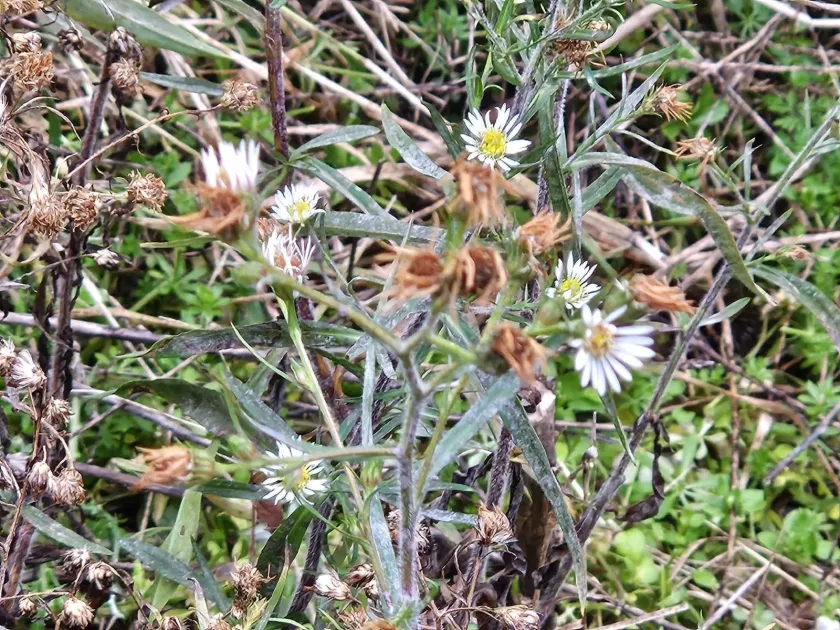
Description
Growing requirements
Pringle's hairy aster (Symphyotrichum pilosum var. pringlei) belongs to the Asteraceae family. It is a perennial herbaceous plant native to North America, known for its resilience and late-season blooming habit.
The plant thrives in full sun exposure, which is essential for healthy foliage and abundant flower production. It is highly adaptable to various soil types, provided they are well-drained and not excessively compacted.
It demonstrates remarkable hardiness and can survive in diverse climatic conditions. Its deep root system allows it to withstand temporary water shortages once the plant is fully established in the soil.
A key requirement for successful cultivation is proper air circulation. Planting at appropriate intervals prevents humidity accumulation around the base, which is crucial for overall plant health.
In terms of agricultural use, this variety is primarily utilized in landscape design and pollinator gardens. Its late flowering provides a vital source of nectar for pollinators when many other plants have already ceased blooming.
Main diseases and pests
Powdery mildew is the most common fungal disease affecting this species. It is characterized by a white powdery coating on leaves, often occurring in late summer when humidity levels fluctuate.
Root rot remains a significant concern, especially in poorly drained soil. Consistent waterlogging can lead to decay, which is why soil porosity and organic content should be carefully managed.
Aphids can frequently infest the flower buds and young shoots. These insects weaken the plant's vigor and may cause deformation of the inflorescences if the infestation is not managed early.
Spider mites are a typical problem during periods of hot, dry weather. They feed on the underside of leaves, causing yellowing and a decline in the plant's aesthetic value if left untreated.
General hygiene in the garden is the best line of defense against most pests and pathogens. Removing diseased stems and clearing fallen leaves at the end of the season prevents overwintering of spores and insects.