
Suaeda vermiculata
Suaeda vermiculata
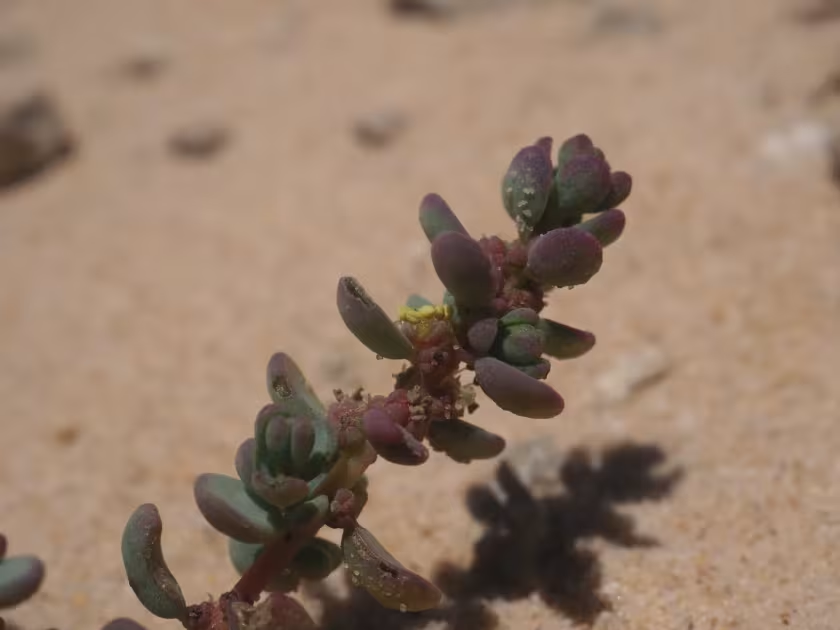
Description
Growing requirements
Suaeda vermiculata is a perennial subshrub belonging to the Amaranthaceae family, known primarily as a highly specialized halophyte. This plant has evolved to thrive in environments characterized by high soil salinity, where conventional agricultural crops would succumb to osmotic stress and dehydration.
The native range of this species covers the arid regions of North Africa, the Middle East, and parts of Central Asia. It typically occupies ecological niches such as salt marshes, saline pans, and desert habitats, demonstrating a remarkable ability to survive in environments with poor soil quality.
Botanically, it is characterized by succulent, cylindrical leaves that serve as water-storage organs. This morphological adaptation allows the plant to manage its internal osmotic potential effectively, sequestering salts within its vacuoles and maintaining turgor pressure even under extreme drought conditions.
The climate requirements for Suaeda vermiculata focus on intense solar radiation and significant heat, which are necessary for its metabolic processes. It is highly resistant to heatwaves and persistent arid conditions, often entering a state of dormancy during the most severe dry seasons to ensure its survival.
Soil conditions are the most critical factor for its successful cultivation. It thrives in soils with high concentrations of chlorides and sulfates, preferring alkaline environments. Its presence is often considered a biological indicator of saline soil conditions, and it plays a role in natural soil aeration and stabilization.
Yield
The primary economic use of Suaeda vermiculata is in livestock fodder production, particularly for camels, sheep, and goats in desert regions. It provides essential minerals and protein during the dry seasons when other forage sources are unavailable, making it a critical asset for pastoral communities.
In addition to its nutritional value, it is valued for its potential in land reclamation. By acting as a phytoremediator, Suaeda vermiculata absorbs salts from the soil surface and subsurface, gradually improving soil quality over time and allowing for a gradual ecological transition in degraded areas.
Yield metrics for this plant are defined by its production of vegetative biomass per hectare. While it does not require fertilizers or irrigation, its growth rates are dictated by seasonal precipitation. It is a low-maintenance, resilient crop that can provide consistent biomass in otherwise unproductive saline soils.
Main diseases and pests
The most significant threat to Suaeda vermiculata populations is overgrazing. Since the plant is a preferred source of forage in barren landscapes, excessive grazing pressure during the peak growing season can severely inhibit its regenerative capacity and lead to the degradation of the plant community.
Pests and diseases are generally not a limiting factor for this crop. The high salt content within its tissues acts as a natural deterrent against most common agricultural pests, such as aphids or lepidopteran larvae. Consequently, the crop is generally grown without the need for chemical pesticides.