
Suaeda australis
Suaeda australis
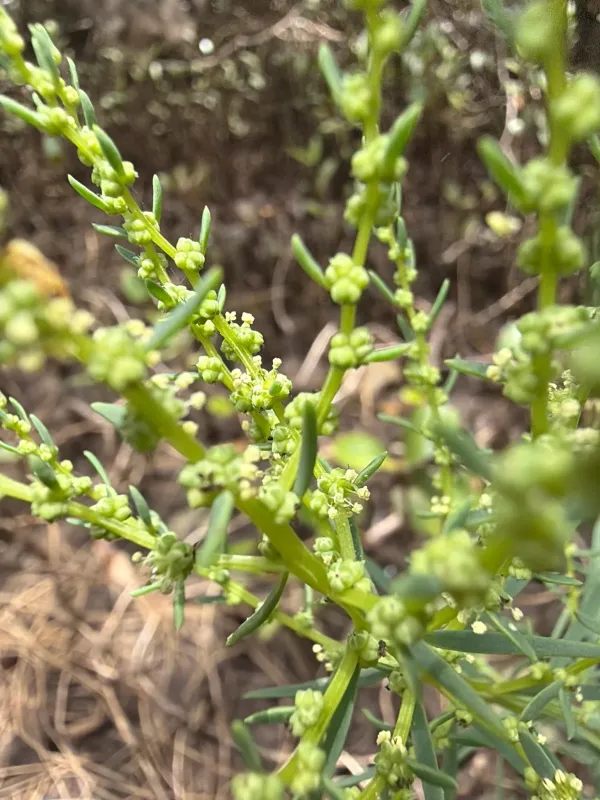
Description
Sowing dates
Suaeda australis is a typical halophyte, meaning its sowing season is strictly dictated by regional climatic conditions and soil salinity levels. In nature, germination occurs in spring when rainfall leaches excess salt from the surface soil layers.
For cultivation, seeds are sown into prepared soil once temperatures reach the optimal range for steady growth. Seeds should be surface-sown, as they require light and contact with a moist substrate to break dormancy and germinate successfully.
Since the species is adapted to coastal environments, it requires high levels of solar radiation throughout the growing period. Providing protection against unexpected spring frosts is essential to ensure the survival of young, tender seedlings.
Sowing density should account for the plant's natural branching habit. Adequate spacing prevents overcrowding, which would otherwise lead to poor air circulation and reduce the overall development of the canopy.
Post-emergence thinning is a necessary practice to maintain the ideal density, allowing each plant sufficient room for vegetative expansion and the formation of high-quality biomass.
Growing requirements
Suaeda australis belongs to the Amaranthaceae family and is a succulent plant. Its unique ability to store salt within its tissues allows it to thrive in saline environments, such as coastal estuaries and marshes, where other crops would fail.
The crop prefers sandy or silty substrates with high sodium content. It demonstrates remarkable tolerance to periodic flooding with saltwater, which is a key adaptation for its survival in native coastal ecosystems.
Climatically, it favors temperate and subtropical zones free from extreme frost. Its fleshy leaves are designed to retain moisture, enabling the plant to endure prolonged dry spells without significant loss of productivity.
Agronomic management requires monitoring soil mineralization. While salt is beneficial, freshwater irrigation can alter the plant's chemical composition and salt-accumulating properties, potentially reducing its distinct culinary quality.
Proper drainage must be maintained to prevent waterlogging when salinity levels drop. Efficient soil management ensures that the plant does not succumb to root rot during periods of lower saline pressure.
Yield
The economic value of Suaeda australis lies in its nutritious green foliage, which possesses a naturally salty flavor. It is increasingly popular as a functional ingredient in gourmet cuisine as a salt substitute.
Yields are highly dependent on the frequency of harvesting and the overall salinity of the growing environment. With proper care, multiple cuts can be harvested throughout a single growing season as the plant regenerates.
In certain regions, it serves as a valuable forage resource. Its ability to grow on marginal lands, which are unsuitable for traditional cereals due to soil salinity, makes it a strategic choice for land reclamation.
Furthermore, it is recognized as a promising feedstock for bioenergy production. The high concentration of lipids in its seeds offers potential for industrial-scale cultivation in the biofuels sector.
Balanced fertilization, particularly with nitrogen, can significantly boost biomass accumulation. However, careful management is required to avoid reducing the plant's innate resistance to harsh coastal conditions.
Main diseases and pests
Powdery mildew is the most common fungal disease affecting this crop, particularly in environments with poor air circulation or high humidity levels within the crop canopy.
Insects, particularly lepidopteran larvae, can cause damage to the foliage. However, because of the plant's high salt content, it is generally less susceptible to massive pest outbreaks compared to conventional leafy vegetables.
Root-knot nematodes can pose a threat, especially when the crop is grown in sandy soils with low organic matter. Preventive measures like crop rotation and site sanitation are essential for long-term health.
Root rot may occur if the soil is kept overly saturated in low-salinity conditions. This makes precise control of the irrigation water salinity a critical management factor for the grower.
Overall, Suaeda australis is highly resilient to most biotic stressors, making it a low-maintenance crop compared to more delicate agricultural species.
Harvesting
Harvesting is typically performed by selectively cutting the young, succulent shoots. This manual or mechanical intervention encourages lateral branching, which increases the cumulative biomass harvested over the season.
The optimal time for harvest is early morning, when leaf turgor pressure is highest. Shoots must be gathered before the stems become woody, as this transition negatively impacts the culinary quality of the produce.
Post-harvest, the product is highly perishable and requires immediate cooling to maintain freshness. Proper refrigeration significantly extends the shelf life of the foliage before it reaches the end consumer.
If seeds are the primary objective, the plant is left to reach full maturity. In this case, a single harvest of the entire biomass is conducted once the fruit capsules have fully developed and hardened.
Cleaning is an essential final step, as the plant often accumulates sand and salt residues on its surface during the growing cycle, which must be removed before packaging for the market.