
Suaeda aegyptiaca
Suaeda aegyptiaca
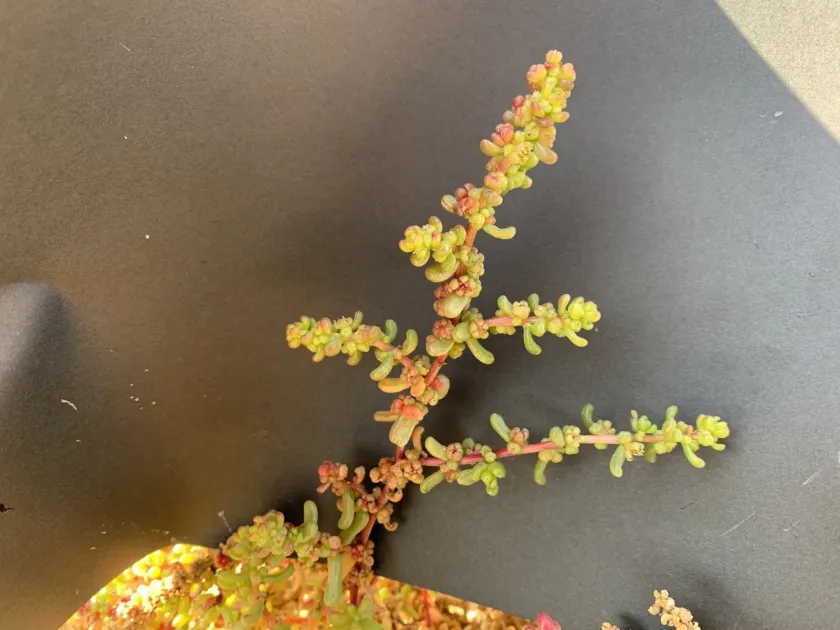
Description
Sowing dates
The optimal time for sowing is during the late spring months when soil temperatures consistently reach 20–25 degrees Celsius. Ensuring the soil is sufficiently warm is critical for promoting early and uniform seed germination.
Seeds should be planted at a shallow depth of 1–2 centimeters to ensure adequate oxygen availability. Because the seeds are small, precise drilling or broadcasting followed by light rolling is recommended to improve soil-seed contact.
Planting density should be optimized based on the intended use, whether for cover crop applications or biomass production. Higher density planting is preferred for soil stabilization and to minimize weed competition during establishment.
Early-stage development is slow, so keeping the field free of competitive weeds is essential for success. Integrated weed management practices during the first month are crucial for preventing yield losses.
Minimal supplemental irrigation during the seedling emergence phase can significantly improve stand establishment. Once the plants have reached the vegetative stage, they show remarkable resilience and can withstand long periods without rainfall.
Growing requirements
Suaeda aegyptiaca is a herbaceous annual plant belonging to the Amaranthaceae family. It is widely recognized as a highly salt-tolerant halophyte, capable of thriving in extreme environments that are typically hostile to standard agricultural crops.
The native habitat of this plant includes the arid regions of Northern Africa, the Middle East, and parts of Central Asia. It is uniquely adapted to saline soil conditions, including high concentrations of sodium chloride and other mineral salts.
The botanical structure of the plant features succulent, fleshy leaves that store moisture, allowing it to survive periods of intense heat and drought. Its robust root system allows it to reach deep water sources in harsh desert soils.
The plant requires full sun exposure and warm temperatures to reach its full potential. It excels in soils that have been abandoned by traditional farmers due to secondary salinization, making it a valuable tool for environmental restoration.
In modern agriculture, Suaeda aegyptiaca is utilized primarily for phytoremediation of degraded lands and as a drought-resistant forage source. Its seeds are also rich in oil, providing potential for secondary industrial applications.
Main diseases and pests
Suaeda aegyptiaca is naturally resistant to most common agricultural pathogens. Its high tissue salt content serves as a biological defense mechanism, deterring many fungi that typically afflict crops.
Locusts and other orthopterans are the most significant threats to the crop, as they may feed on the succulent foliage. Monitoring fields for signs of damage during peak summer months is a necessary management activity.
Poor soil drainage leading to waterlogged conditions is one of the few environmental factors that can harm the plant. Ensuring that fields are well-drained prevents the development of root rots.
Competition from aggressive weed species is the primary yield-limiting factor during the first four weeks after sowing. Effective site preparation, including pre-plant tillage, is vital to mitigate this risk.
Chemical control of pests is rarely necessary due to the plant's natural hardiness. Should management be required, utilizing biological controls is the most compatible approach for maintaining the crop's ecological profile.