
Suaeda acuminata
Suaeda acuminata
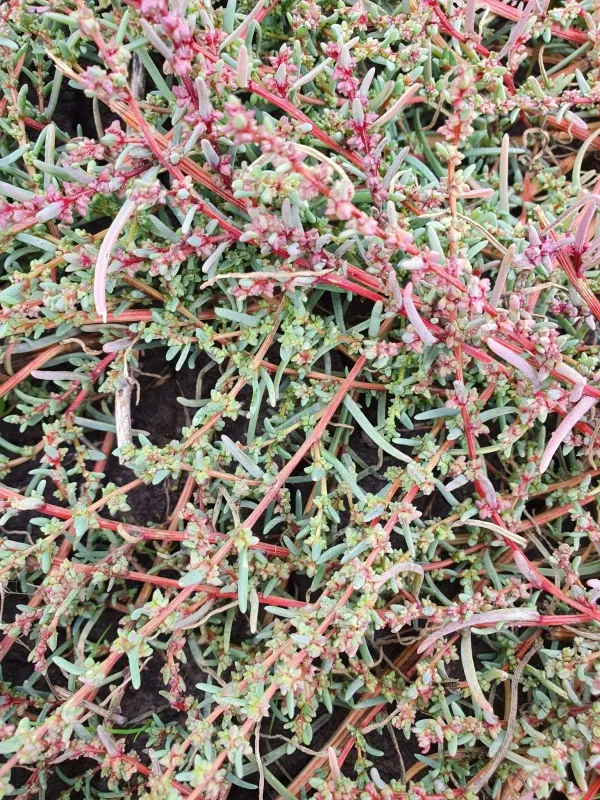
Description
Sowing dates
Suaeda acuminata is an annual herbaceous halophyte belonging to the Amaranthaceae family, highly adapted to saline and arid environmental conditions.
The sowing process begins in spring once soil temperatures reach approximately 10 to 12 degrees Celsius, which generally coincides with the end of the frost period.
Seeds should be sown at a shallow depth of 1 to 2 centimeters to ensure they have enough energy to emerge through the soil surface effectively.
This crop exhibits remarkable resilience, making it suitable for establishing vegetation on degraded saline soils where traditional agricultural crops fail to survive.
Proper spacing is crucial during sowing to ensure each plant receives adequate light and soil nutrients, thereby maximizing the total biomass production.
Growing requirements
The primary ecological requirement for Suaeda acuminata is high soil salinity; it functions as a halophyte, using mineral salts for its metabolic processes.
The crop is strictly heliophilic, meaning it demands full sun exposure throughout the day to support its vigorous vegetative growth and development.
It prefers sandy loam or silty saline soils that provide enough aeration for the root system while maintaining sufficient moisture levels after irrigation or rain.
Temperature tolerance is a defining feature of this species, allowing it to thrive in the harsh, high-heat environments typical of semi-arid steppe regions.
While the plant is inherently drought-tolerant, strategic watering during the peak vegetative phase can significantly enhance yields and nutritional quality.
Yield
Yields of Suaeda acuminata vary based on soil salinity levels and climatic conditions, typically ranging from 5 to 12 metric tons of fresh biomass per hectare.
As a forage resource, it provides essential minerals and nutrients for livestock in regions where traditional fodder crops cannot be grown due to excessive salt.
Cultivating this crop supports sustainable land use by converting unproductive saline deserts into managed agricultural fields with moderate economic returns.
The yield stability of Suaeda makes it a reliable insurance crop for farmers operating in volatile climatic zones prone to frequent droughts and soil degradation.
Ongoing monitoring of plant density and health allows growers to optimize agricultural inputs, ensuring the highest possible yield of high-quality green matter.
Main diseases and pests
Suaeda acuminata possesses a natural resistance to many common agricultural diseases, largely due to its high salt content in tissues which inhibits pathogen growth.
The main threats to the crop include various coleopteran pests that may attack the stems or foliage during the early stages of the growing season.
Over-saturation of the soil, often caused by improper water management, can lead to root rot and other fungal infections that compromise the plant's health.
Invasive weed competition poses a significant challenge during the first weeks of growth, as the young Suaeda plants develop relatively slowly initially.
- Infestation by leaf-eating insects during the early growth stages.
- Risk of fungal infections in poorly drained or waterlogged soils.
- Competition for light and resources from aggressive weed species.
Harvesting
The harvest should occur during the early flowering stage to capture the highest nutritional value before the stems become overly fibrous and lignified.
Standard harvesting equipment can be used to collect the biomass, which is often processed into silage or fed directly to livestock in fresh form.
Seed harvesting must be timed carefully after full maturity, as the seeds are prone to shattering and dispersal if handled too late in the season.
Efficient harvesting techniques are essential to preserve the integrity of the plant material and maintain high standards for livestock feed quality.
Post-harvest residues act as valuable organic matter, contributing to soil structure improvement when incorporated back into the saline field surface.